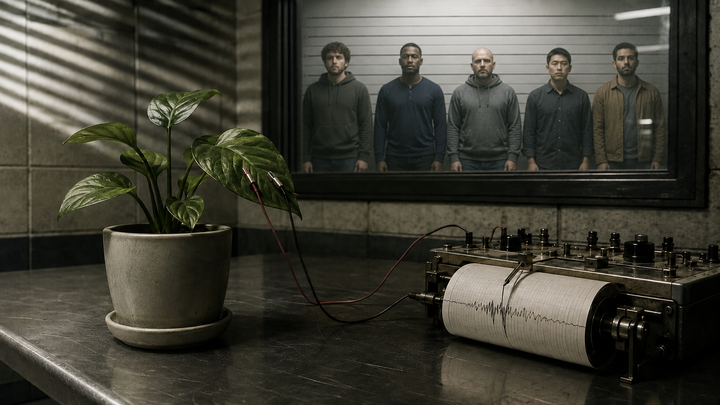
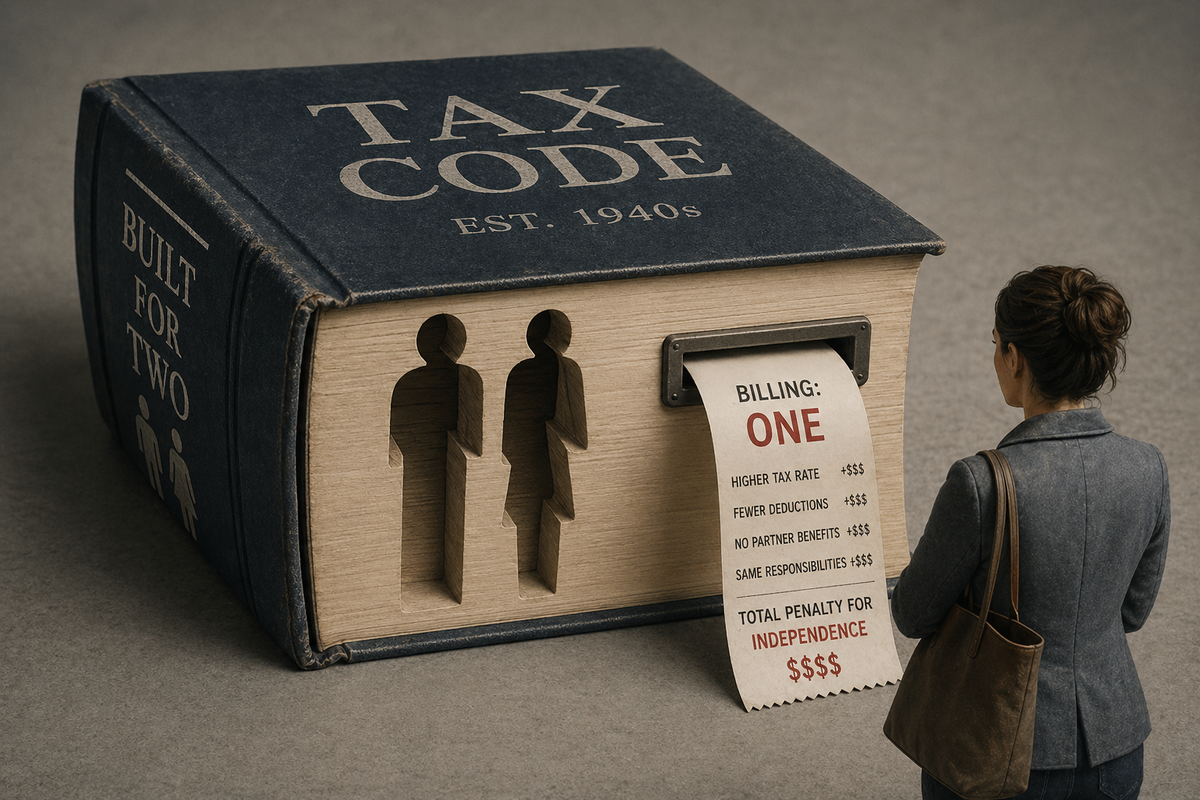
Built for Two. Billed to One.
The economy didn't forget single people. It was specifically, structurally, almost lovingly designed to punish them. And nobody in government is losing any sleep over it.
Last spring I booked a solo holiday. A week somewhere warm, nothing fancy — a small hotel, flights, a hire car. The total came to just over double what my coupled friends paid per person for the same destination, the same week, essentially the same trip. They split a room. They split a car. They split a bottle of wine with dinner and still paid less per glass than I did ordering one by myself at the bar.
I did not split anything. I paid the single supplement. I paid it on the room, quietly absorbed it in the car hire, tipped generously at dinner because I felt self-conscious taking up a table for one on a Saturday night, and flew home slightly poorer and significantly more annoyed than when I left.
When did "I'd like one, please" become a premium product?
We talk about being single as a lifestyle choice, a chapter, a phase — something personal and internal. What we talk about far less is that being single is also, bluntly, an economic disadvantage engineered into almost every system we navigate. Tax law. Housing. Insurance. Travel. Healthcare. Pension structures. Grocery packaging. The entire built environment of modern life was designed around a unit of two — and if you show up as a unit of one, you pay extra for the inconvenience of existing outside the template.
Let's start with the government, since they started it
Most Western tax systems were built in an era when the default household was a married couple, one earner, two dependents, and a dog. That era is gone. The households are different now. The government's enthusiasm for updating the tax code to reflect that? Substantially less gone.
Married couples in most countries can pool allowances, transfer unused tax thresholds, split income to reduce their combined liability, and access a range of credits and benefits that simply don't exist for single filers. A couple with one high earner and one low earner pays significantly less tax than two single people earning the same combined income. Same money. Different paperwork. Wildly different bill.
The singles tax — what it actually looks like
In most OECD countries, a single person earning the average wage pays a higher effective tax rate than a one-income married couple at the same earnings level. In some countries the gap is modest. In others it runs to thousands per year — not because single people earn more, but because the system was written to reward a particular domestic arrangement and never seriously revised. You are not imagining it. You are paying for it.
And it's not just income tax. Inheritance law, pension survivor benefits, next-of-kin hospital rights, joint mortgage assessments, shared parental leave structures — almost every financial and legal mechanism that touches ordinary life was architected around the assumption that adults come in pairs. Show up alone and the system looks at you like a confused error message.
We elect governments to represent us. Single adults are now the largest growing household demographic in most Western countries. So why does the policy still read like it was written in 1954?
Housing: the cruelest joke
Let's talk about the one-bedroom flat. Or rather, let's talk about the fact that buying one — alone, on one income, in any city that has a functioning economy — has become a near-impossible act of financial heroism for anyone without a significant inheritance or an extraordinarily well-timed career.
The mortgage system was designed for two salaries. Affordability assessments are built around combined income. The deposit required for a one-bedroom property is often nearly as large as the deposit for a two-bedroom — because property prices don't scale neatly with bedroom count, but your solo income absolutely does. Meanwhile your coupled friends are pooling two salaries, splitting one deposit, and being congratulated on their sensible financial planning.
They didn't make a better financial decision. They made a relational one. The market rewarded them for it anyway.
The housing maths nobody says out loud
Two people earning average salaries can typically borrow and save at roughly twice the rate of one person earning the same average salary — not because they're smarter or harder-working, but because fixed costs (rent, utilities, council tax, internet, insurance) split two ways are dramatically lower per person than borne alone. A single person spending 40% of their income on housing is making the same rent payment as a couple who each spend 20%. The couple has 80% left. The single person has 60%. Over a decade, that gap compounds into a chasm.
The singles surcharge — itemised
Beyond tax and housing, there is a sprawling ecosystem of smaller indignities that add up to something substantial over a year. Behold, the unofficial singles receipt:
Annual Singles Surcharge — Itemised
None of these is catastrophic alone. Together, across a year, they represent a meaningful and permanent financial disadvantage for living your life as one person instead of two. It is a tax on autonomy. And unlike actual taxes, there's no rebate, no appeal, and no MP who's going to raise it in Parliament.
The situationship economy
Is it any wonder that people are staying in mediocre relationships longer than they should — when leaving costs this much?
Here is a thing we don't say enough: the financial penalty of singlehood is a quiet, powerful force keeping people in relationships that have expired. Breaking up doesn't just mean heartbreak and dividing the bookshelves. It means one person — usually the lower earner, disproportionately the woman — absorbing the full weight of fixed costs on a single income, often while also navigating a housing market that wasn't built for her.
The economics of coupledom are so entrenched that staying — even in something loveless, even in something damaging — can feel financially rational. And that is a systemic failure, not a personal one. We have built an economy that quietly punishes people for leaving, and then we wonder why so many people don't.
What would actually help — and why nobody's doing it
The fixes aren't complicated in theory. Genuinely individualised taxation. Affordable housing designed and priced for single occupancy. Legal frameworks that extend next-of-kin and benefits rights to chosen family and close friends, not just spouses. Insurance and travel industries regulated to stop penalising solo customers. Pension structures that don't assume a survivor.
None of this is radical. Most of it already exists in some form in some countries. What's missing is the political will — because single people, despite being the fastest growing household demographic, have never been treated as a constituency worth courting. Couples vote as units. Families are photographed as units. Policy is written for units.
The single woman eating alone at the restaurant, paying her full hotel rate, filing her individual tax return, and wondering why her savings look so different from her coupled friends' — she is not a niche edge case. She is the most rapidly growing demographic in the developed world. And she is, politically speaking, almost entirely invisible.
At some point, we have to ask: is this an oversight — or is it working exactly as designed?
The answer, if you follow the money and the votes and the policies that keep not changing, is uncomfortable. The couple-centric economy is not a relic of an era that forgot to update. It is an active, ongoing, continuously maintained choice. It is choosing, every budget cycle, not to fix something fixable. It is deciding, every election, not to represent someone representable.
Single people aren't asking to be subsidised. They're asking to stop being penalised for a living arrangement that harms no one, costs the state nothing, and represents — more and more — the actual texture of modern life.
We just want one supplement-free hotel room and a tax code written in this century. That's it. That's the whole manifesto.
Boondock Rebel asks the questions that feel rude at brunch and necessary everywhere else. No easy answers. Just honest ones.