How to Actually Tune Into Tarot (No, You Don't Need to 'Believe' First)

Intuition isn't a download from the universe. It's a skill, and like every other skill, it gets built by reps, not by faith.
The Inner Rebel

Intuition isn't a download from the universe. It's a skill, and like every other skill, it gets built by reps, not by faith.


People ask me this constantly, usually in a hushed voice like they're confessing something: "how do I get more intuitive with the cards?" They're expecting me to talk about opening their third eye, or clearing their energy, or waiting for a psychic download to arrive like a software update. I'm going to disappoint them the same way I'm about to disappoint you: tuning into tarot is mostly a skill-building process, not a spiritual unlocking, and the people who get good at it fast are the ones willing to treat it like practice instead of waiting for permission from the universe to feel something.

Step One: Stop Trying to Believe, Start Trying to Notice

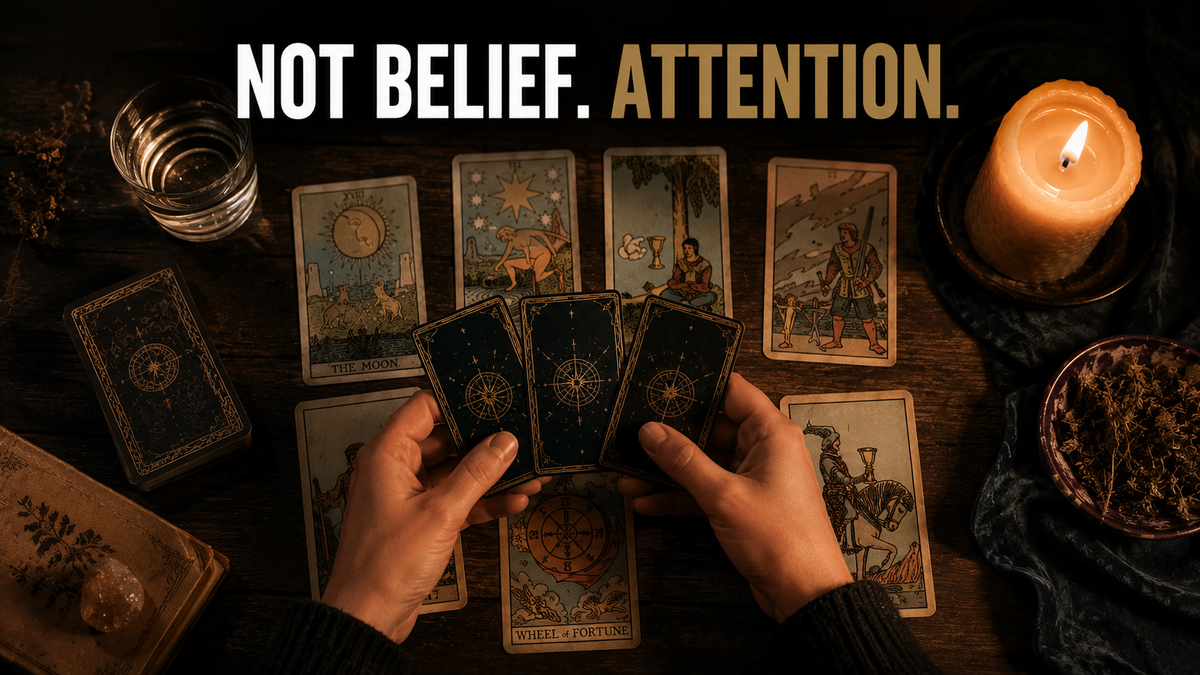
The biggest block I see in beginners isn't lack of talent. It's that they've front-loaded belief as a prerequisite — convinced themselves they need to be fully certain magic is real before they're allowed to start practicing, and then they sit there, paralyzed, waiting for a certainty that was never going to arrive before the skill did. Drop that requirement entirely. You don't need to believe a card "knows" anything. You need to be willing to notice your own reaction to it — what image jumps out, what feeling surfaces, what memory it accidentally triggers — and treat that noticing as the actual practice. Belief can show up later, if it shows up at all. Noticing has to come first, because noticing is the whole mechanism.

Step Two: Learn the Cards as Psychology, Not Prophecy

Every card in the deck is built around a recognizable human situation — beginnings, endings, betrayal, restraint, collapse, rebuilding. Before you ever try to "feel" anything mystical, just learn what each card is actually describing as a human pattern. The Tower isn't a doom prophecy. It's the picture of a structure that was already unstable, finally falling. The Hermit isn't isolation as punishment. It's the deliberate withdrawal a person needs before they can see their situation clearly. Learn the cards this way first — as a vocabulary for human experience — and your "intuition" later will mostly be pattern recognition wearing a more mystical-sounding name. That's not a lesser version of intuition. That is what intuition actually is, in every domain, from chess to medicine to tarot: pattern recognition built from enough reps that it stops feeling like calculation and starts feeling like a hunch.

What people call a "gut feeling" is usually just very fast, very compressed pattern recognition. Tarot intuition works the same way. It just needs the reps first.

Step Three: Read for Yourself, Constantly, Before You Read for Anyone Else

Most beginners want to skip straight to reading for friends, because that's where the validation is. Resist this. Pull a card for yourself every morning, before you know what kind of day you're about to have, and then check in that night: did the card's themes show up anywhere, even loosely, even in a form you wouldn't have expected? You're not testing whether the card predicted your day with supernatural precision. You're building the specific muscle of holding a symbol loosely in your mind and watching for where your own life rhymes with it. That muscle, built on yourself first, is what eventually lets you sit across from a stranger and do the same thing with their life instead of yours.

Step Four: Get Comfortable Being Wrong, Out Loud, Often

This is the step almost nobody tells beginners, and it's the one that actually separates people who get good from people who stay stuck performing confidence they don't have. You will misread cards constantly while you're learning. You'll feel certain a card means one thing and watch it clearly mean something else in the actual situation. Good readers aren't the ones who never misread a card — they're the ones who got comfortable being visibly wrong early and often, in low-stakes practice, so that by the time it matters, the fear of being wrong isn't loud enough to drown out what they're actually noticing in the room.

Step Five: Pay Closer Attention to the Person Than the Card

Once you've got the basics down, the actual leap in skill comes from shifting where your attention goes. Beginners stare at the card, trying to extract meaning from it like it's a locked box. Better readers spend most of their attention on the person across from them — their face when a card lands, the question behind the question they actually asked, the thing they keep almost-mentioning and then changing the subject away from. The card is a prompt. The person is the actual text you're reading. This is also, not coincidentally, just what being a genuinely good listener looks like in any context — therapy, friendship, a hard conversation with a parent. Tarot just gives you a structured occasion to finally practice it on purpose.

A Short List to Actually Start With

  • Pull one card every morning. Write down your gut reaction in one sentence before you look up the "official" meaning.
  • At night, check whether anything from the day rhymed with the card, even loosely. Don't force it. Just notice.
  • Once a week, pull three cards for a real situation you're actually facing, and write out what each one seems to be pointing at before you reach for a book.
  • Read for one trusted friend who will tell you honestly when something landed and when it didn't. Use their feedback, don't defend against it.
  • Stop waiting to feel certain before you start. The certainty, if it ever shows up, comes after the reps — not before.

So: if intuition is mostly pattern recognition built from reps, what's actually stopping you from starting tonight — the lack of a gift you don't have yet, or the discomfort of practicing something out loud before you're good at it?

Subscribe now — make a bold move