Inside DHS' Covert Surveillance of Minnesota Churches, Unions, and a Brewery
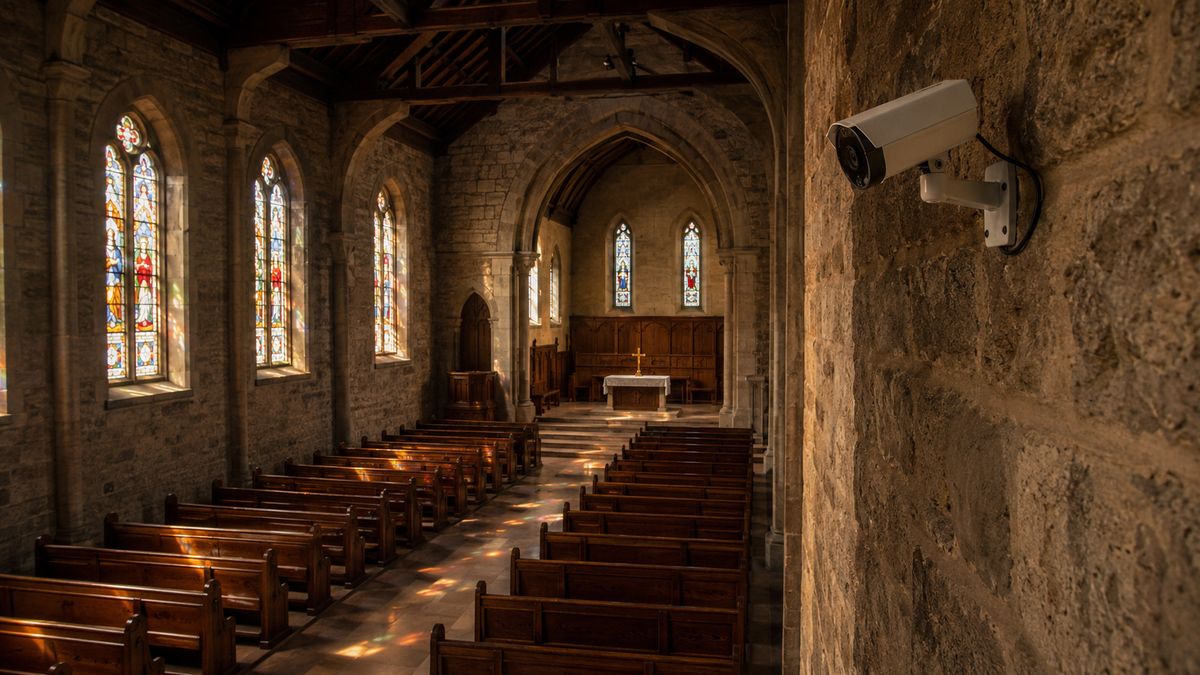
Court filings unsealed last week in a federal conspiracy case out of Minneapolis show the Department of Homeland Security ran a monthslong covert surveillance operation against people who were never charged with a crime. Agents wore wires into a church self-defense class, logged license plates outside a Lutheran congregation, sat in on a brewery meeting about a lawful protest, and subpoenaed the financial records of two national labor unions. One government exhibit shown to a grand jury mapped eighteen organizations — a teachers union, a bike repair shop, the state AFL-CIO — under a single label: "The Conspiracy." None of those eighteen were charged. The operation was aimed, DHS says, at fifteen people tied to last winter's immigration enforcement surge in Minnesota. The paper trail says it reached considerably further than that.
The record, as filed
The disclosures came out of United States v. Sant, an ongoing case against fifteen people accused of organizing "direct action" against ICE operations in Minneapolis last winter, including alleged plans to blockade the federal building that served as ICE headquarters during the surge. A defense motion filed in federal court laid out what investigators had actually been doing while building that case: an undercover agent attended a February meeting of ICE protesters at Prince of Peace Lutheran Church in Roseville, recorded plates in the lot, and compiled dossiers with names, addresses, and family and employment details on people present. A separate undercover agent wore a wire to a self-defense class at University Baptist Church in Minneapolis in May. Another sat in on a January meeting at La Doña Cerveceria, a Minneapolis brewery. Agents also recorded meetings at libraries and schools, infiltrated private group chats, and — in one library meeting — an undercover agent reportedly told an attendee he worked in construction and could build items for "more direct action," and that he didn't mind going to jail.
DHS obtained financial records from the Service Employees International Union and the Communications Workers of America. Prosecutors argue this was "within the authority" of the agency. In a Friday court filing, the government said it did not target the thousands of peaceful protesters in the state, only the fifteen defendants, and that the surveillance was "standard law enforcement practice."
What the government says it wasn't doing
The "Conspiracy" slide is the document doing the most work here, and the government's defense of it is narrower than it first sounds. Prosecutors say they never argued the AFL-CIO or any of the other sixteen organizations on that chart were part of the conspiracy — the slide, per a DHS agent's grand jury testimony, was meant to show what groups the fifteen defendants were affiliated with. That is a distinction the people on the chart are unlikely to find reassuring. Minnesota AFL-CIO president Bernie Burnham called it a return to McCarthyism. Aaron Terr of the Foundation for Individual Rights and Expression put the sharper point on it: when officials infiltrate meetings, log plates, and pull years of financial records from mainstream advocacy groups, the operative question is whether they had evidence of a crime — or whether the object was to map a movement and let the mapping itself do the deterring.
Rachel Levinson-Waldman, who directs the Liberty and National Security Program at the Brennan Center, described the scope as "breathtaking" — not the legality, which she says remains genuinely unsettled under the Fourth Amendment, but the sheer volume of government resources devoted to watching people who were never indicted. She drew the comparison a lot of people will draw: COINTELPRO, the FBI's domestic counterintelligence program that ran from the 1950s into the early 1970s, surveilling the Black Panthers, the Communist Party, Martin Luther King Jr. and Malcolm X. That program's exposure produced the reforms — tighter DOJ guidelines on investigative techniques — that are supposedly still governing conduct like this. The Minnesota case is now the test of whether those guidelines meant what they said.
The Helix problem, one file over
This surfaces in the same month DHS quietly published a privacy impact assessment for Helix, a Secret Service platform that fuses surveillance video, facial recognition, and license plate data into a single searchable environment around protected sites like the White House and the Capitol. Helix was one of only a handful of privacy impact assessments the department has published all year — the category covering law enforcement and surveillance tools hadn't been updated since September of last year. Policy analysts who reviewed it called it, comparatively, one of the more disclosed systems in the department's portfolio. The worry isn't Helix. It's what isn't getting a PIA at all, in a year when DHS's surveillance footprint is documented to be expanding on multiple fronts — mobile surveillance funding, AI-enhanced data platforms, facial recognition tools used by ICE and CBP — while the paperwork that's supposed to accompany that expansion has largely stopped showing up.
Read next to the Minnesota filings, the pattern gets easier to name: a domestic surveillance apparatus that grows through operational memos and grand jury exhibits rather than through the disclosure process built to make that growth visible. The self-defense class, the brewery meeting, the union subpoenas — none of it needed a published assessment. It just needed a case number.
What the congregation is left with
At University Baptist Church, someone has taped a sign to the door: federal agents not permitted on premises. It is a request, not a barrier. Sergio Manancero, who manages the brewery where agents sat in on a protest meeting, says he isn't surprised the government was there — he assumes they wanted to confirm nothing serious was being planned, and in a way he's glad they saw for themselves. Cody Sanders, the interim pastor at University Baptist, expects something quieter and more corrosive: people glancing at strangers in the parking lot, wondering who else might be gathering information. A hearing in the conspiracy case is set for this week. Whatever a judge decides about the fifteen defendants, the eighteen organizations on that slide already know what it feels like to be catalogued as adjacent to something they were never accused of doing.
Sources
- NPR: "Churches, libraries and breweries: Inside DHS' covert surveillance operation"
- CourtListener: United States v. Sant, defense motion (Docket 212)
- CourtListener: United States v. Sant, government response (Docket 227)
- DOJ: Press release on charges against Direct Action Minnesota members
- Minnesota AFL-CIO: Statement on federal investigation
- FedScoop: "Secret Service reveals new surveillance system amid slowdown in privacy impact assessments"
- FedScoop: "DHS-built surveillance apparatus to surge in year ahead, documents show"