Is Tarot a Joke? Tell That to the People It Actually Helped.
I've heard "it's just a parlor trick" from people who've never once sat across from what real grief looks like up close.
The Inner Rebel
I've heard "it's just a parlor trick" from people who've never once sat across from what real grief looks like up close.

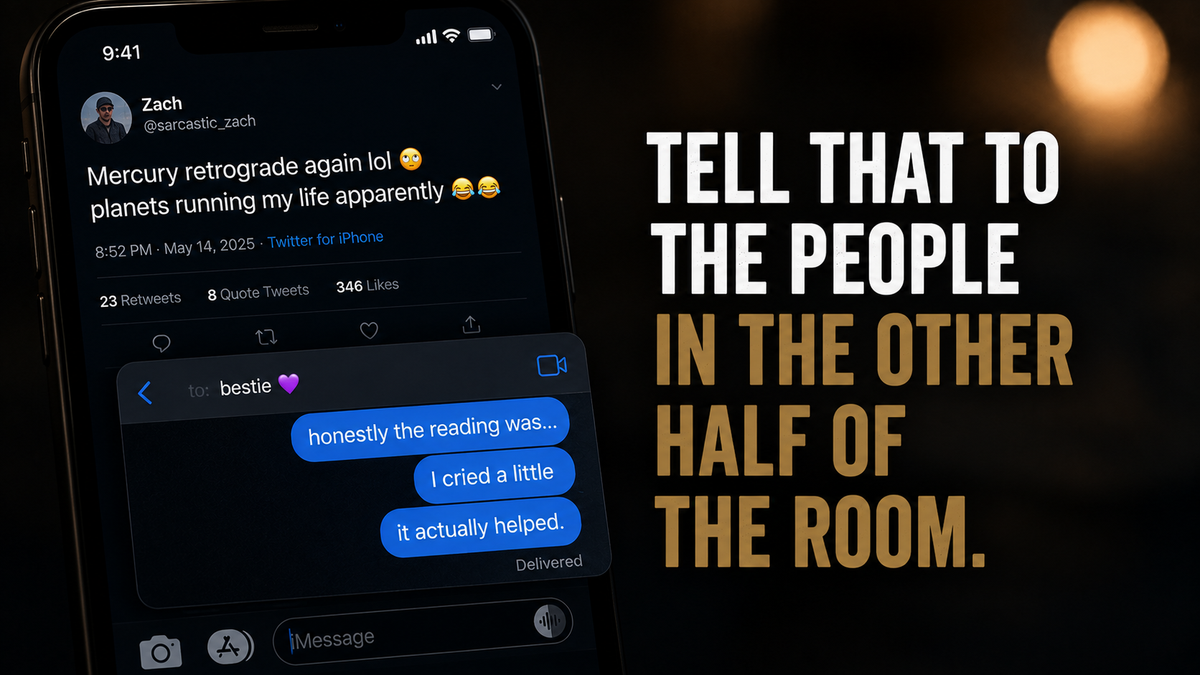
I've had this conversation more times than I can count, usually at a party, usually from someone three drinks in who's just found out what I do for a living and has decided, generously, to enlighten me about how it's all nonsense. "Come on, it's just cold reading." "You're basically a fortune cookie with better marketing." "People just hear what they want to hear." I used to argue. I don't anymore, mostly because I've realized the argument was never really about tarot. It was about whether the person across from me had ever needed something they couldn't get anywhere else, and found it, somewhere unexpected, and was now deeply uncomfortable being reminded of that.
What Actually Happens in the Room
Let me tell you what an hour of tarot actually looks like, stripped of the mystique and the skepticism both, because the real thing is less dramatic than either side imagines. A person sits down carrying something they haven't said out loud yet — a marriage they suspect is over, a diagnosis they're scared to ask more questions about, a decision about a parent's care that no one in the family wants to be the one to make. They didn't come to me because they think I have a hotline to the universe. Most of them, including plenty of lifelong believers, come because they need a structured, judgment-free hour to finally say the thing, and a deck of cards on a table makes that hour feel less like therapy they can't afford and more like permission they've been waiting for.
I've watched people cry the moment a card landed that named, out loud, the exact fear they'd been carrying silently for months — not because the card was magic, but because hearing it said by someone else, finally, broke something loose that had been stuck. I've watched people leave a reading and make a phone call they'd been avoiding for a year. I've watched someone recognize, mid-sentence, that the relationship pattern they kept blaming on bad luck had a name, and a shape, and had happened to them three times before under three different faces. None of that required the cards to be supernatural. It required someone to sit still, pay close attention, and ask better questions than "how's it going" for forty-five straight minutes. That is rarer than it should be, and it is not nothing.
Call it a parlor trick if you want. The person who finally said the thing they'd been carrying alone for a year doesn't experience it as a trick. They experience it as the first time someone actually listened.
The Mockery Usually Isn't About Tarot
Here's what I've noticed about the people most committed to the "it's all nonsense" position: it's rarely actually about the epistemics of card-based divination. It's much more often a defense against vulnerability — an unwillingness to admit they might need exactly the kind of structured, attentive, judgment-free hour I just described, and a discomfort with the idea that they might get it from something as unserious-sounding as a deck of cards instead of from an institution with a framed degree on the wall. Mocking the format lets them avoid the harder admission: that they, too, are carrying something unsaid, and don't currently have anywhere safe to put it down.
I don't say this to be smug about it. I've done the same thing myself, in other areas of my life, dismissing some practice or person because taking it seriously would have meant admitting I needed something I wasn't ready to need yet. It's a deeply human move. I just don't let it convince me my work is worthless because someone at a party needed it to be, for their own reasons, that night.
The Honest Limits, Because I Won't Pretend There Aren't Any
I'm not going to stand here and tell you tarot replaces medicine, therapy, or a financial advisor, because it doesn't, and any reader who tells you otherwise is doing real harm and deserves every bit of skepticism aimed at them. I don't diagnose illness. I don't promise outcomes. I don't tell people to leave their job, end their marriage, or skip their chemotherapy because a card told them to — and I will end a reading, full stop, with anyone trying to use it that way. The honest version of this work has hard edges, and a reader who won't name them is a reader you should be suspicious of, for exactly the reasons the skeptics are suspicious of all of us.
What it does do, reliably, in the room, with the actual person in front of me: it slows someone down long enough to hear their own thoughts in a different order. It gives language to a feeling that's been formless. It offers a non-threatening way to rehearse a hard conversation before having it for real. None of that needs to be supernatural to be valuable. It just needs to be true, and I've watched it be true often enough, for long enough, to stop needing anyone's permission to call it real help.
Tell That to Them
So when someone tells me it's just a parlor trick, here's what I'd genuinely like them to do: tell that to the woman who finally admitted, mid-reading, that she already knew her marriage was over and just needed someone to say it first so she didn't have to be the one. Tell that to the man who walked in convinced he was cursed and walked out understanding, for the first time, that he'd been repeating his father's exact pattern with every partner he'd ever had. Tell them it was just a trick. I'd be curious whether they believe themselves saying it.
So: if the help someone received was real, the moment it landed was real, and the change in their life afterward was real — at what point does it actually matter whether the mechanism that got them there fits inside a worldview you're comfortable with?