Since When Does Being Famous Make You Worth Listening To?

On the quiet psychosis of celebrity worship — and how we handed our lives, our wallets, and our sanity to people whose greatest skill is being watchable.

Since When Does Being Famous Make You Worth Listening To?
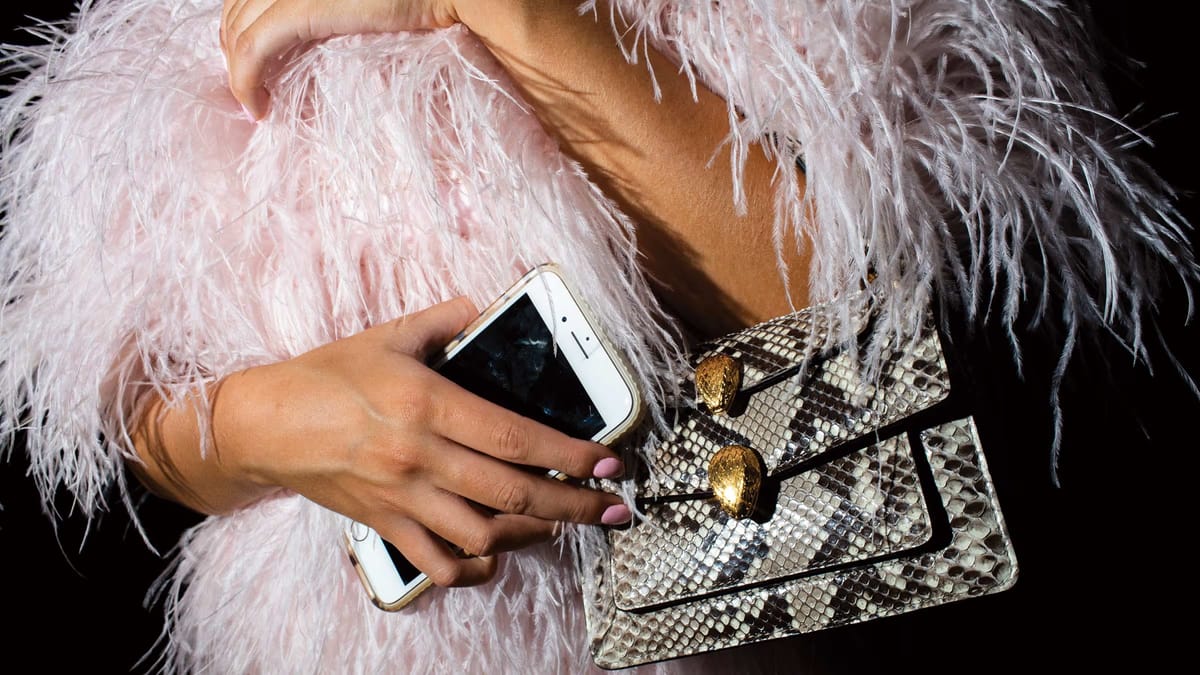
Pink feathers, snakeskin, and a screen — the holy trinity of the attention economy. She's not holding a phone. She's holding an audience.

I was standing in a pharmacy last year, holding a $78 serum recommended by a woman who is famous for — and I want to be precise here — being born to famous parents and going to parties. The serum promised to "rebalance my skin's energetic frequency." I read that three times. I put it in my basket.

Reader, I bought it.

At what point did we decide that fame was a qualification for anything other than being famous?

Somewhere between the invention of the lifestyle blog and the algorithmic rise of the influencer, something quietly broke in our collective brain. We stopped asking "what do you know?" and started asking "how many followers do you have?" And now we have a planet full of people taking life advice, medical guidance, relationship counsel, financial tips, and spiritual direction from actors, makeup artists, and people who got famous for dancing in fifteen-second clips.

This is not normal. This has never been normal. And yet here we are.

Let's be honest about what these people actually do

Acting, at its core, is the skilled repetition of words someone else wrote, in a costume someone else chose, on a set someone else built. It is a legitimate art form. It is also not a transferable credential in nutrition, geopolitics, vaccine science, or how you should raise your children.

Putting on makeup beautifully is a skill. A real one. It is not, however, a qualification in mental health, relationships, or what supplements your body needs. Singing — actually singing, with genuine feeling and craft — can move people to tears. It cannot move toxins out of your liver, despite what the detox tea ad implied.

We wouldn't let a plumber perform our surgery just because we admire his work. So why are we letting celebrities perform on our minds?

The answer, inconveniently, is not stupidity. It's psychology. And it goes deeper than most of us want to look.

The psychology — and yes, the psychosis — of celebrity worship

Researchers actually have a name for it: Celebrity Worship Syndrome. It exists on a spectrum, and more of us are on it than we'd like to admit.

The celebrity worship spectrum

🟡 Entertainment-social — "I just enjoy following them." Harmless on the surface. This is most of us. We follow, we enjoy, we occasionally buy what they're selling. The parasocial relationship feels friendly and low-stakes. It isn't always.

🟠 Intense-personal — "I feel like I really know them." The celebrity becomes a companion. Their opinions feel like advice from a trusted friend. Their life milestones feel personal. Their product recommendations feel like a favour. This is where wallets empty and medical decisions get made.

🔴 Borderline-pathological — "I would do anything for them." Full identity fusion. The fan's self-worth becomes entangled with the celebrity's existence. Criticism of the celebrity feels like a personal attack. This is the stan culture we all laugh at — until someone we know is in it.

Here's what's chilling: most people who have moved from level one to level two don't notice the transition. It happens in the warm bath of daily content — the morning routine video, the "honest" skincare post, the crying-in-the-car confessional that feels so raw, so real, so just like us.

The parasocial trap

Parasocial relationships — the one-sided emotional bonds we form with people who don't know we exist — are not new. We've always had them with authors, musicians, film stars. What's new is the manufactured intimacy of the influencer era. The "no-makeup" selfie taken by a makeup artist. The "real and raw" caption written by a PR team. The "this genuinely changed my life" product post that paid for their third holiday home.

Our brains, bless them, cannot fully distinguish between a real relationship and a performed one when it's delivered in the first person, directly into our eyes, at 7am while we're still in bed. The warmth we feel is neurologically real. The relationship is not.

The machine behind the magic

What we experience as authenticity is often an extremely refined content strategy. The oversharing is calibrated. The vulnerability is scheduled. The "I've been struggling lately" post goes up on a Tuesday for maximum engagement. The crying is real — and it's also content. This is not a cynical attack on every person who creates online. Some are genuinely trying. But the system rewards performance of authenticity over actual authenticity, every single time. Knowing that changes how you watch.

If someone is paid to seem like your friend, are they your friend — or are you their product?

What it's actually costing us

Beyond the $78 serum. Beyond the supplements that do nothing and the cleanses that do worse. There is a quieter, more corrosive cost to living inside someone else's curated reality every day.

It makes your own life feel insufficient. Not dramatically — not all at once — but in the slow accumulation of a thousand tiny comparisons. Her kitchen. His relationship. Their holiday. That body. This confidence. Your Sunday starts to feel like a failure before noon because it doesn't look like theirs, and you forget — you keep forgetting — that theirs doesn't look like theirs either. Not really. Not off camera.

It also outsources your thinking. When we absorb enough of someone else's opinions, aesthetic, values, and worldview, we start to mistake their voice for our own inner voice. We recommend their products to our friends as if we discovered them. We adopt their positions on things we've never researched. We repeat their phrases. We start to want what they want — and stop knowing what we actually want.

How much of what you want right now is actually yours — and how much was installed by someone with a ring light and a brand deal?

The danger nobody talks about loudly enough

People have delayed cancer diagnoses because a celebrity they trusted promoted alternative therapies. People have destroyed their gut health on influencer-recommended "wellness" protocols. People have made financial decisions — actual, life-altering financial decisions — based on advice from someone whose only financial qualification is having a lot of money from being famous.

And when it goes wrong, the celebrity moves on to the next partnership. The terms and conditions protected them. The damage is yours.

Fame has never been a warranty. It is not a credential. It is not consent to be trusted. It is not evidence of wisdom, integrity, or genuine care for the people watching. It is, at its most basic, the result of being seen by many people. That's it. That's the whole qualification.

So why do we keep doing it?

Because we are lonely. Because community has fractured and the parasocial fills the gap. Because the algorithms are extraordinarily good at serving us people who feel like us, sound like us, seem to understand us. Because it is genuinely easier to outsource your opinions to someone charismatic than to form them yourself in a world drowning in information.

And because — let's be honest — it's comforting to believe that someone has it figured out. That somewhere, someone's morning routine and supplement stack and relationship and kitchen and sense of purpose are all genuinely, actually, as good as they look. That the life we're chasing is real and achievable and waiting for us, one product drop away.

It's a beautiful lie. And we buy it because the alternative — accepting that nobody has it figured out, that the mess is universal, that your imperfect unremarkable Tuesday is actually the whole point — is terrifying and unglamorous and doesn't come with a discount code.

"The most radical thing you can do in 2026 is form an opinion that nobody paid for, want something nobody recommended, and live a life that looks absolutely nothing like content."

Boondock Rebel asks the questions that feel rude at brunch and necessary everywhere else. No easy answers. Just honest ones.

Subscribe now — make a bold move