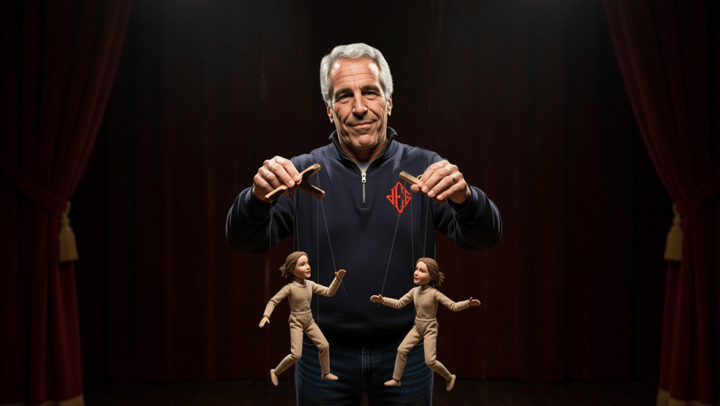
The Epstein Class: How Power Positions Women
Hierarchy doesn’t begin with cruelty. It begins with order. Over time, that order hardens into systems that decide who leads, who obeys, and whose bodies are regulated. The roles available to women were never accidental — they were designed to preserve power.

Every hierarchy begins with a story about order.
Someone leads. Someone follows. Someone protects. Someone obeys.
Over time, these arrangements stop feeling like choices and start feeling like nature. Authority looks natural. Compliance looks proper. Inequality looks inevitable.
This is how hierarchy sustains itself: not through force alone, but through normalization.
When power feels natural, it becomes invisible.
HIERARCHY AS FOUNDATION
In any structured system, power concentrates. Decision-making authority moves upward; accountability moves downward. Those closest to power set the rules. Those further away live under them.
Hierarchy is not inherently oppressive. But when power flows in only one direction — and when access to that power is restricted — inequality hardens into structure.
The question is never simply who holds power.
The question is who is allowed to approach it.
PATRIARCHY AS STRUCTURE
Patriarchy is not merely a cultural attitude. It is a system of organization that has historically placed men at the center of authority — political, economic, religious, and familial.
For centuries, this structure defined women primarily in relation to men: daughters, wives, mothers, dependents, moral guardians, or symbols of honor. Participation in public authority was restricted; influence was expected to be indirect.