The Triangle Report Has No Date. That Is the Story.
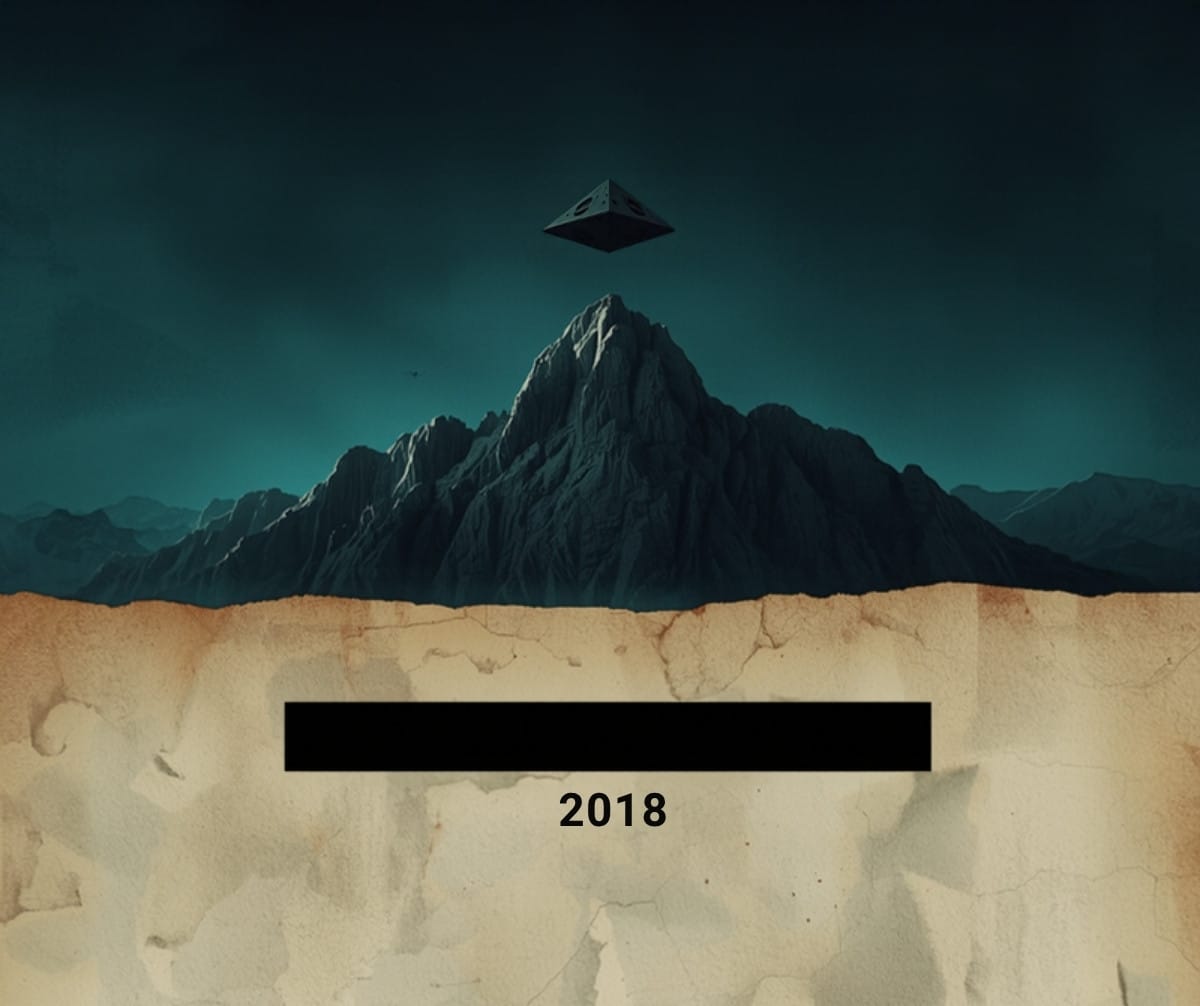
On Friday, October 23, the U.S. government released its seventh batch of UAP records, ten documents in all. One of them describes three federal agents watching a matte black triangle, roughly 15 feet across, rise above a ridgeline near a secure facility, hover, and cross about a mile and a half in roughly three seconds without a sound. The date of the sighting is redacted. So is the location. What the public got is a recent, credible-sounding incident with its coordinates in time and space removed, and that is the part worth reading slowly.
What the document says
According to Axios, the FBI filed the account as an "Unidentified Aerial Object Observation Report," and the Defense Department separately classified it as a UAP report. Two of the three agents had extensive operational experience and familiarity with drones. One used a thermal monocular and could not detect the heat signature you would expect from propulsion. The object reportedly climbed to about 300 feet without tilting or swaying, held position for around 20 seconds, then moved horizontally at fighter-jet speed and vanished.
Two agencies, two filing categories, one event. That the FBI and the Pentagon each logged the same sighting under their own framework tells you something about how these reports travel: they get routed, not resolved. Nothing in the release says anyone concluded what the object was.
The rest of the batch
The other nine documents are older, and in some cases much older. Some came from the National Archives and date to the 1940s. There is a 1954 account from a Swedish airline pilot, a 1957 report from a B-52 pilot over Saudi Arabia, and two reports from Catalina Island in 1949 and 1952. There is a declassified 2010 Defense Department report on Skinwalker Ranch in Utah, which recounts witness accounts of unusual phenomena, reaches no final conclusions, and notes that DNA from a hair sample traced to a raccoon. And there is a 1963 interagency memo, with 1960s correspondence, on how NASA and the Defense Department would handle and discuss recovered "fragments" of space vehicles.
That last item is the quiet one. It does not claim anything was recovered. It documents that two agencies thought it worthwhile to plan, in writing, how to talk about the possibility.
A program, not a revelation
The releases fall under a 2026 executive order directing disclosure of UAP records from all government sources. Anadolu Agency reports the effort is branded the Presidential Unsealing and Reporting System for UAP Encounters, or PURSUE, and that Pentagon spokesman Sean Parnell said more files will come on a rolling basis, with the next batch in preparation.
Rolling releases have a rhythm. Each batch produces a news cycle built around its most vivid page, and then the cycle ends before anyone has compared the batches against one another. Seven batches in, the useful question is no longer what any single document says. It is what the full set, read together, is built to leave out. Per Axios, the records do not say whether the government believes UAP indicate non-human intelligence, and they do not say whether UAP pose a national security threat. Those are the two questions the public actually has.
Why the redaction matters more than the triangle
Old sightings are safe to release. Their witnesses are gone, their bases are closed, and their context has decayed. A recent incident involving federal agents near a secure facility is different, and the decision to release it with the date and place blanked is a decision about what the public is permitted to cross-reference. A sighting with no date cannot be checked against flight logs, radar archives, drone-incident reports, or weather. It can be admired, and it cannot be tested.
Elsewhere, outside researchers have been pulling their own threads. Headlines this month describe an NSA release of hundreds of pages of formerly Top Secret UMBRA-compartment UAP records following a Disclosure Foundation FOIA appeal, and a 3,668-page FOIA release that reportedly shows a paper trail at a NASA that had said it held no UAP records. We have not independently reviewed those documents, and the claims should be read as claims. But the pattern they suggest is consistent: material that agencies said did not exist keeps appearing once someone files an appeal.
What is left
A voluntary release and a compelled one are not the same thing. The first arrives on the government's schedule, curated, with the sensitive parts already handled. The second arrives after someone has argued, in writing, that the first was not enough. If most of what is new is surfacing through the second route, then the official program is functioning less as disclosure than as a pace car.
Three trained observers saw something they could not identify, and then two agencies filed it, classified it, and eventually released it with the date removed. Somebody still has the date.
Sources
- Axios: Mysterious "flying triangle" sighting leads new government release of UFO documents
- Anadolu Agency: Pentagon releases 7th batch of UFO files
- Disclosure Foundation: NSA Releases Hundreds of Pages of Formerly Top Secret UMBRA UAP Records After FOIA Appeal
- ParaRational: NASA Said It Had No UAP Records. A 3,668-Page FOIA Release Shows a Paper Trail