AI Washing: The Layoff Excuse Even OpenAI's CEO Doesn't Believe
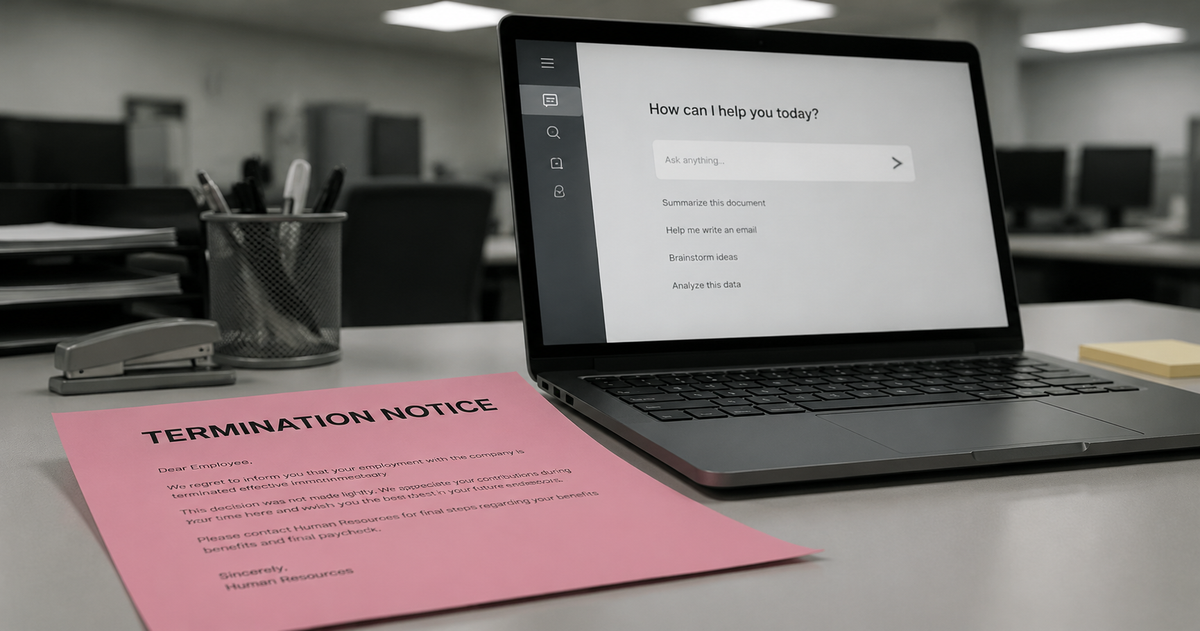
Tech companies cut roughly 1,115 jobs a day in 2026, nearly double the pace of the year before, and the explanation offered again and again is the same one word: AI. Meta, Oracle, Block, Microsoft, Monday.com — the list of employers citing artificial intelligence as the reason for layoffs keeps growing, and so does the tally, into the hundreds of thousands. There's just one problem. The man who runs the company that built the AI everyone is blaming says a lot of that isn't true.
The Layoffs, As Announced
The week's additions read like a routine now. Cloudflare, Coinbase, Upwork, and PayPal all cut roles recently and pointed, at least in part, to AI. Monday.com announced it would lay off roughly 600 employees — about 20% of its workforce — citing the same shift. Microsoft cut about 4,800 positions, most of them in its Xbox gaming division, on July 9. Standard Chartered's CEO told investors the bank would cut 15% of its workforce by 2030 because AI is replacing what he called "lower-value human capital." Say it enough times, in enough earnings calls, and it starts to sound like physics — an inevitable force reshaping the economy from outside anyone's control.
Except physics doesn't have a public relations department, and this explanation has one. "AI washing" is the term researchers and labor economists now use for a company attributing a layoff to artificial intelligence when the actual driver is something less flattering to say out loud: overhiring during the pandemic, margin pressure, an activist investor, or simply the ordinary math of running a leaner balance sheet.
The Man Who Built the Chatbot Says So
In February, OpenAI CEO Sam Altman said the quiet part out loud: companies are blaming AI for workforce reductions they would have made regardless. That's a notable admission from the person with the most to gain from the public believing his product is powerful enough to replace entire departments. If the industry's own most bullish spokesperson is waving people off the narrative, the narrative was probably doing more work than the technology.
Labor economists tracking the layoffs generally agree. Most of the companies making these announcements don't have AI systems capable of doing the jobs they're cutting — not yet, and in some cases not in any near-term roadmap. What they do have is a business press that treats "we're becoming AI-native" as a credible, even bullish, story, and a much less appealing alternative: "we hired too many people in 2021 and now we're correcting for it."
Follow the Capital, Not the Chatbot
There's a simpler and more literal way to explain the pattern, and it has nothing to do with chatbots doing anyone's job. Amazon, Meta, Google, and Microsoft are on pace to spend a combined $650 billion on AI infrastructure this year alone — data centers, chips, networking, power contracts. That is an extraordinary sum, and it has to come from somewhere without wrecking the quarterly numbers Wall Street is watching. Payroll is the largest controllable cost most of these companies have. Cutting it doesn't just save money; it self-funds the AI buildout without the company having to show investors a dip in near-term profitability. The AI capital expenditure and the AI-attributed layoff aren't separate stories. They're the same balance sheet, read from two different directions.
None of this requires a single job to have actually been automated. It only requires a plausible story that investors want to hear, and "we're investing in the future" tells that story better than "we're paying down the cost of yesterday's hiring spree."
Why the Label Is Doing Work
Calling a layoff "AI-driven" isn't a neutral description. It changes who's responsible for it. A company that overhired and is now correcting course made a decision — one that a board, a CEO, a hiring plan can be held accountable for. A company caught in the undertow of unstoppable technological progress didn't decide anything; it adapted. One of those framings invites scrutiny. The other invites sympathy, or at least resignation. It also changes what response looks like reasonable to the public and to policymakers — retraining programs and shrugs for the second story, negotiated severance and harder questions about corporate decision-making for the first.
Workers on the receiving end mostly can't tell the difference from where they're standing. The job is gone either way, the reason offered in the press release doesn't change the math of a mortgage payment, and there's no simple way to audit whether the automation a company cites is real, aspirational, or entirely rhetorical. That asymmetry — between what a company can claim and what an outside observer can verify — is precisely what makes the label useful to the companies using it, whether or not the underlying technology had anything to do with the decision at all.
Sources
- Tech Layoffs Hit 1,115 a Day in 2026: Companies Cite AI but Cuts Fail to Boost Returns — Tech Times
- Monday.com Is the Latest Tech Company to Blame AI for Layoffs — TechCrunch
- Tech Layoffs This Week: Cloudflare, Coinbase, Upwork, and Others Point to AI — Fast Company
- Expert Warns: Companies Are 'AI Washing' by Blaming Layoffs on Automation They Haven't Actually Built — 24/7 Wall St.
- Andy Jassy and Jack Dorsey Blamed AI for Massive Layoffs, but Sam Altman Warns AI Washing Is Real — Barchart
- Did AI Take Your Job? The Truth About AI Washing — Built In