From 400 Feet Up, Everyone's a Blueberry

Power doesn't watch you — it watches your category. The surveillance isn't personal. At altitude, you stop being a person. You become a blueberry. The problem is you still think you're the Milky Way.
From 400 Feet Up, Everyone's a Blueberry

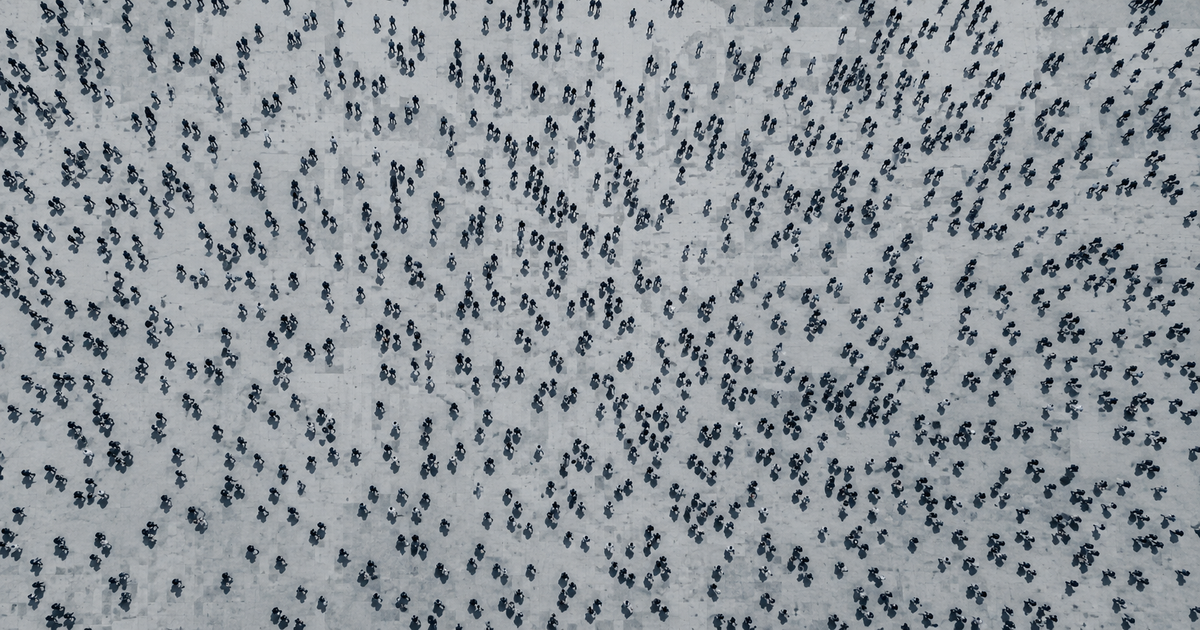
From 400 feet up, everyone's a blueberry.

That's not a metaphor. That's just geometry. At drone altitude — roughly the height at which surveillance becomes legal in most jurisdictions, the height at which a human body stops having a face — what remains is a shape. Dark, round, clustered. Moving in patterns that can be read, logged, predicted, and acted upon.

The person below has a name, a headache, an opinion about their sister-in-law, a specific memory of a Tuesday in 2009 that still bothers them. From 400 feet, none of that is visible. What's visible is: direction of travel, speed, proximity to other blueberries, deviation from expected blueberry behavior.

This is how power sees you. Not maliciously. Just accurately, from where it's standing.

Power Has Always Lived at Altitude

Governments don't govern you — they govern populations. Platforms don't serve you — they serve engagement rates. Algorithms don't know you — they know your cluster. The insurance company, the credit bureau, the recommendation engine, the city planner: every system that has power over your daily life operates at an altitude where you are not a person. You are a data point inside a category inside a pattern inside a trend.

This isn't new. It's always been true. What's new is that the altitude has dropped. It used to take the apparatus of a state to surveil a population. Now it takes an app update. The drone doesn't have to be in the sky. It's already in your pocket, watching you move through your days, logging the shape of your attention, modeling your next likely blueberry move.

And here is where it gets uncomfortable: you consented to all of it. Enthusiastically. Because the app was free.

But We Think We're the Milky Way

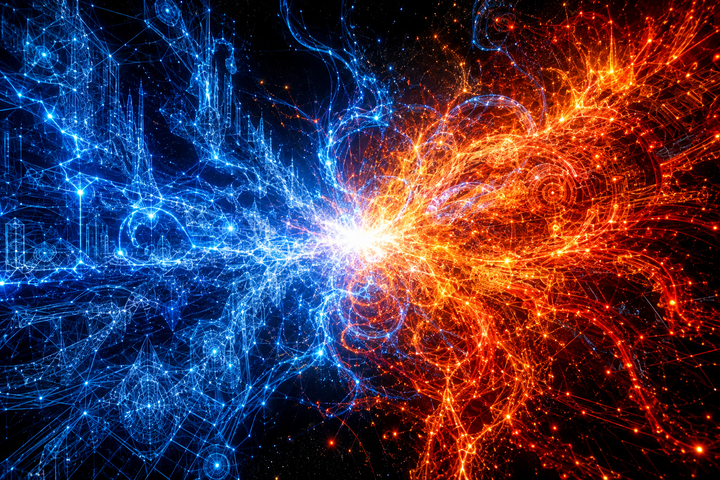
Here's the other thing that's true, and it's harder to say: while the systems see us as blueberries, we experience ourselves as galaxies.

Not just individuals — entire cosmologies. The center of a story that began at birth and will end only with us. The protagonist of a world where our feelings are data, our opinions matter, our presence changes the room, our grief is the heaviest grief, our insight is the clearest insight, our anger is the most justified anger currently in circulation.

Social media didn't create this. It industrialized it. It built an infrastructure for self-importance — likes, reach, follower counts, viral moments — that made it feel like the world was watching and agreeing. That your particular blueberry had been selected. Seen. Amplified. Special.

The cruelty is that this wasn't entirely a lie. You were being seen. Just not the way you thought. You were being seen at scale, as a signal, as a behavioral input. Your carefully written thread about injustice was simultaneously meaningful to the twelve people who read it and completely invisible to the system processing it — which saw only: engagement type, duration, share rate, emotional valence, predicted revenue per impression.

You thought you were the Milky Way. You were a blueberry generating good engagement metrics.

The Gap

The gap between blueberry and Milky Way is where most of modern suffering lives.

It's the gap that makes layoffs feel like betrayals. You weren't an employee — you were a cost-per-unit that exceeded acceptable thresholds. The system didn't hate you. It couldn't see you well enough to hate you.

It's the gap that makes algorithmic moderation feel like censorship. Your post wasn't removed because someone read it and disagreed. It was flagged by a classifier trained on patterns. The system didn't silence you. It processed a signal that matched a category.

It's the gap that makes "the customer service representative will be with you shortly" feel like an existential indignity. You know you're one of forty thousand calls this week. You know that to the system, you are a ticket number. And yet some part of you expected to be met as a person, because that's how you show up to every interaction: as someone for whom this matters.

The system operates at altitude. You live at ground level. That gap never fully closes, and nobody warned you it existed.

What You Do With This

There are two bad responses to knowing you're a blueberry.

The first is nihilism. If I'm just a pattern in a dataset, nothing I do matters, every system is rigged, resistance is performance, awareness is its own trap. This is the cul-de-sac where a lot of very smart people spend their thirties.

The second is denial. Doubling down on the Milky Way story. Building a personal brand. Optimizing your output for maximum reach. Becoming the most visible blueberry, the most engaged blueberry, the blueberry with the most followers. Winning the game that was designed to extract value from you, and calling it freedom.

The third option — the harder one — is to hold both things at once.

You are a blueberry. That is factually, structurally, legally true at the altitude where power operates. You are also a Milky Way. That is experientially, relationally, irreducibly true at the altitude where your life actually happens.

The mistake is trying to make the system see your galaxy. It can't. It's not built for that. The move is to stop needing it to — and to direct your galaxy-level significance toward the people and places that can actually receive it.

From 400 feet up, everyone's a blueberry. But nobody lives at 400 feet. That's just where they watch from.

The question isn't whether the watchers can see you. It's whether you can see them watching — and adjust accordingly.

Subscribe now — make a bold move