They Released 300 UAP Files Dating to 1944. Some Were Never Supposed to Exist.

Since May 2026, the PURSUE system has released more than 300 declassified UAP files spanning eight decades. The most important question isn't what's in them — it's what the files prove about everything that was said before them.
They Released 300 UAP Files Dating to 1944. Some Were Never Supposed to Exist.

Boondock Rebel

The US government spent decades saying it wasn't keeping UAP files. Since May 2026, it has released more than 300 of them — sensor videos, witness accounts, military records, and photographs dating back to World War II. The most important question isn't what's in the files. It's what the files prove about everything that was said before them.
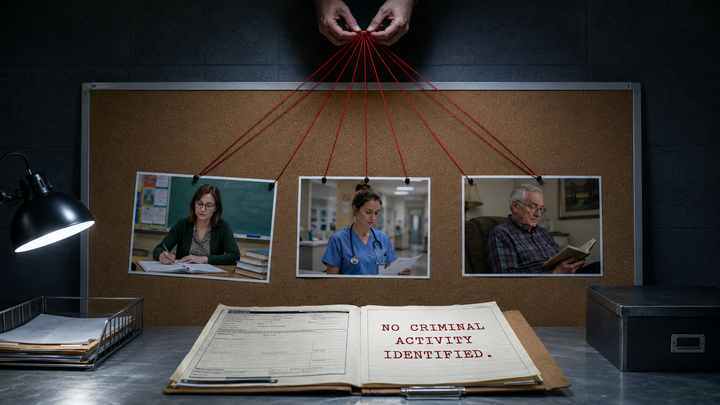
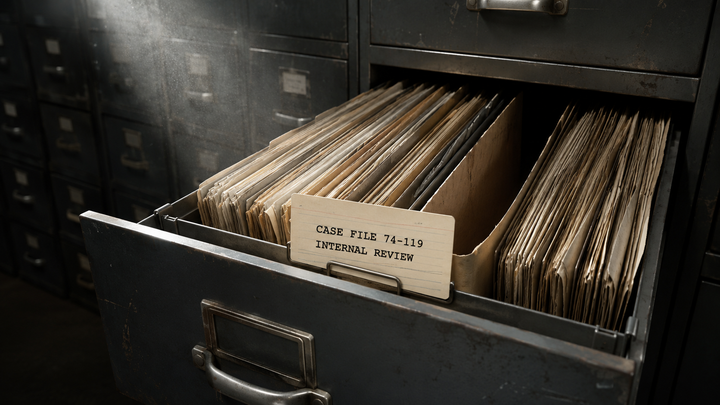
In May 2026, the first tranche of files was released through PURSUE — the Presidential Unsealing and Reporting System for UAP Encounters. The first release included 160 classified documents: 117 PDFs, 29 sensor videos, and 14 photographs. The dates on those files ran from 1944 to 2026. By mid-June, four tranches had been released. By early July, more were pending. The cumulative total: more than 300 files spanning eight decades of US government records on unidentified aerial and anomalous phenomena, now publicly accessible for the first time.

The headlines have focused on individual cases — specific videos, specific sightings, specific documents that describe things that don't fit standard explanations. But the more significant thing the PURSUE releases prove is not about any individual file. It's about the eighty years of official statements that preceded them.

What the Government Said for Eighty Years

The standard official position on UAP for most of the post-war period ranged from "there is nothing to investigate" to "these incidents have been investigated and found to have conventional explanations" to "we do not maintain records on this subject." Project Blue Book — the Air Force's official UAP investigation that ran from 1952 to 1969 — was publicly framed as a comprehensive review that found no evidence of anything anomalous. When it was closed, the official conclusion was that UAP were not a threat and were not evidence of anything unexplained. The Freedom of Information Act requests that followed Blue Book, over subsequent decades, produced some documents but repeatedly ran into claims that additional records did not exist or had not been retained.

The PURSUE files demonstrate that records existed which were not produced in those FOIA requests. Files from 1944. Files from the 1950s and 1960s. Sensor data, witness accounts, military records — held across multiple agencies for decades, through administrations of both parties, through multiple rounds of claimed transparency, and not released. The files don't prove that the government knew something specific. They prove that the government had more than it said it had, for longer than anyone was told, and that the claim of comprehensive investigation was incomplete at best.

What's in the Files

The released files are heterogeneous — they come from different agencies, different eras, different classification levels, and represent different types of encounters and investigations. Some are what you'd expect from military operational records: dry, terse, describing sensor anomalies in the language of aircraft maintenance logs. Some are accounts from named witnesses — military personnel, in some cases with rank and assignment identified — describing encounters that those personnel could not explain and that their chain of command was apparently unable to explain either. Some include imagery: sensor video and photographs that show objects whose characteristics — flight profile, apparent propulsion, interaction with the environment — don't match known aircraft. Some files add detail to encounters that were previously known but only partially documented. Some are entirely new: events with no prior public record, cases that existed only in the classified archive until now.

The files that matter most are the ones that prove the others existed. Once you know there were eighty years of records being held, the question is no longer "were they keeping files." The question is what's still not in the release.

What the Redactions Tell You

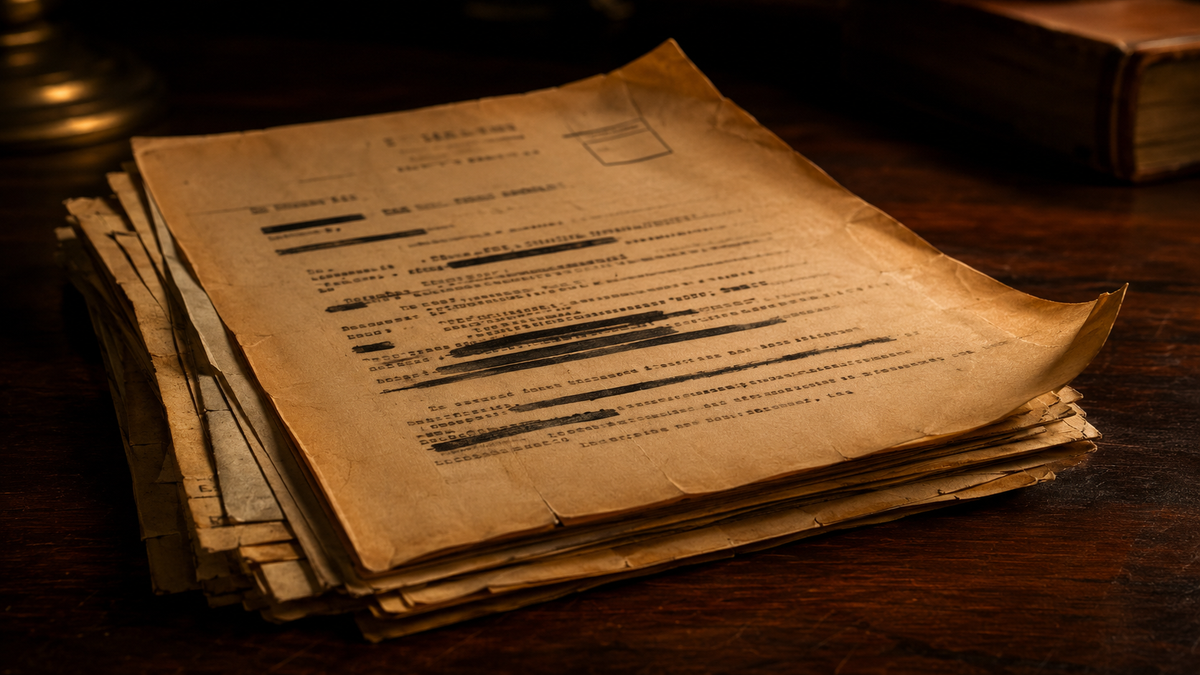
The released files are not unredacted. Classification review was applied, and sections of documents — in some cases significant sections — remain blacked out. The redactions follow the standard pattern: specific location data, specific personnel names, specific technical capabilities that the reviewing agencies determined should not be made public. What the redactions also reveal, by their pattern and density, is where the classification review judged the material to be most sensitive. In some files, the redactions are sparse — the document is mostly readable. In others, whole pages are blocked. The densest redactions tend to cluster around specific incident characteristics, specific agency involvement, and specific technical analysis. Reading the redaction pattern is its own form of information: the places where they chose not to tell you what the records say are the places where the records apparently say something they still don't want said.

What's Not in the Release

David Grusch, the intelligence official whose 2023 congressional testimony alleged the existence of classified UAP retrieval and reverse-engineering programs, described a category of records and programs that go beyond what any FOIA or PURSUE release has yet produced: material evidence, not just documentation of sightings. If Grusch's testimony is accurate, there is a classification tier that the PURSUE releases have not touched — programs so compartmented that their records are not held in the standard classified archives being reviewed for release. The existence of the PURSUE files — the proof that significant records were held and not previously disclosed — neither confirms nor refutes Grusch's specific claims. But it does establish that the premise of his testimony — that the government held more than it acknowledged — was correct as a general matter. Whether the specific programs he described exist in the tier beyond what PURSUE is releasing is a question the current releases cannot answer.


They had files from 1944. They had sensor videos. They had photographs. They had witness accounts from named military personnel. They had all of it, for eighty years, and the official position was that the investigation was comprehensive. The files are out now. The discrepancy between what the files contain and what was said about them for eight decades is not a footnote. It is the story.

— The Signal

Sources:

KEEP DIGGING →

There Is a Sealed Door at the End of a 30-Meter Corridor. The Door Has Been Closed 4,500 Years.

Researchers found a 30-meter corridor inside the Great Pyramid ending at a sealed stone door. Robots went in. Zahi Hawas

You might also like