The FBI Is Buying Your Location History. No Warrant Required. Just a Credit Card.
The FBI director sat in front of Congress in March 2026 and said the quiet part out loud. Asked directly by Senator Ron Wyden whether the FBI would commit to not buying Americans' location data, Kash Patel replied that the agency "uses all tools to do our mission" and that it purchases "commercially available information that is consistent with the Constitution and the laws under the Electronic Communications Privacy Act."
Translation: yes, they're buying your location history. No, they don't need a warrant. No, they're not particularly sorry about it.
Wyden called it what it is: "an outrageous end-run around the Fourth Amendment." The FBI declined to say which data brokers they use, how often they buy, or how many Americans are in the dataset. The FBI spokesperson said they had nothing to add beyond Patel's testimony. Patel's testimony was that this has led to "some valuable intelligence."
So: valuable intelligence. For whom. Against whom. Under what circumstances. Unknown.
Here's How the Loophole Works
The Fourth Amendment requires the government to convince a judge — based on actual evidence of actual wrongdoing — before it can demand your private data from a company. This is not a technicality. It is the specific legal mechanism the founders designed to prevent exactly this: a government that decides it wants to know where you go, and simply takes that information.
The loophole runs through your phone. When you download a free app — a weather app, a game, a coupon aggregator — you agree to terms of service that most people don't read, which typically include the right to share your data with "partners." Those partners sell it to data brokers. Data brokers compile it. The government buys it. At no point does a judge get involved, because technically no one seized anything. They just bought it. The market handled it. The Fourth Amendment, designed to constrain government power, was not written to account for a commercial data ecosystem that didn't exist until thirty years ago.
This is not a new practice. The FBI admitted in 2023 that it had previously purchased location data, though then-director Christopher Wray claimed at the time that it was no longer actively doing so. Patel's testimony in March confirmed it had resumed — or perhaps never stopped.
U.S. Customs and Border Protection has used data sourced from real-time bidding systems — the invisible auction that happens in the milliseconds before an ad loads on your phone. The Defense Intelligence Agency has done the same. The practice is not limited to one agency or one administration. It is a bipartisan feature of how the national security apparatus now operates.
The Advertising Industry Built the Surveillance State. Accidentally.
This is the part that gets left out of most coverage. The infrastructure being used to track Americans was not built by the government. It was built by the advertising industry. Every targeted ad you've ever seen was made possible by a system that tracks where you go, what you look at, what you buy, who you call, and when you sleep. That system was built to sell you sneakers and streaming subscriptions. It was optimized for conversion rates and click-through percentages. It was never designed with the assumption that the FBI would one day be a customer.
But it is an exceptionally good surveillance product, as it turns out. Better, in some ways, than anything a government could have built and deployed, because it runs on infrastructure people voluntarily installed on their own phones, because it is updated constantly by private companies with profit motives, and because it sits outside the legal frameworks designed to constrain government surveillance. The FBI didn't build a dragnet. It rented one.
The data brokers in this chain — companies most Americans have never heard of and cannot name — are under no obligation to tell you they sold your location history to the federal government. They are not required to notify you. They are not required to obtain your meaningful consent. They are required only to mention it somewhere in a privacy policy, buried in the same legalese you agreed to when you downloaded the app that told you the weather.
What "Commercially Available" Actually Means
The FBI's position is that if information is commercially available — meaning a private company will sell it to anyone with money — then the government is simply acting as a customer, like any other, and no warrant is required. This logic has not yet been tested in front of the Supreme Court against the digital-era Fourth Amendment cases the court has already decided.
In Carpenter v. United States (2018), the Supreme Court ruled 5-4 that the government needs a warrant to access cell tower location data from phone companies, because such data reveals "the privacies of life" and people have a reasonable expectation of privacy in it. Chief Justice John Roberts wrote the majority opinion and specifically flagged that digital-age surveillance creates capabilities that the founders couldn't have anticipated and that old legal frameworks may be inadequate to address.
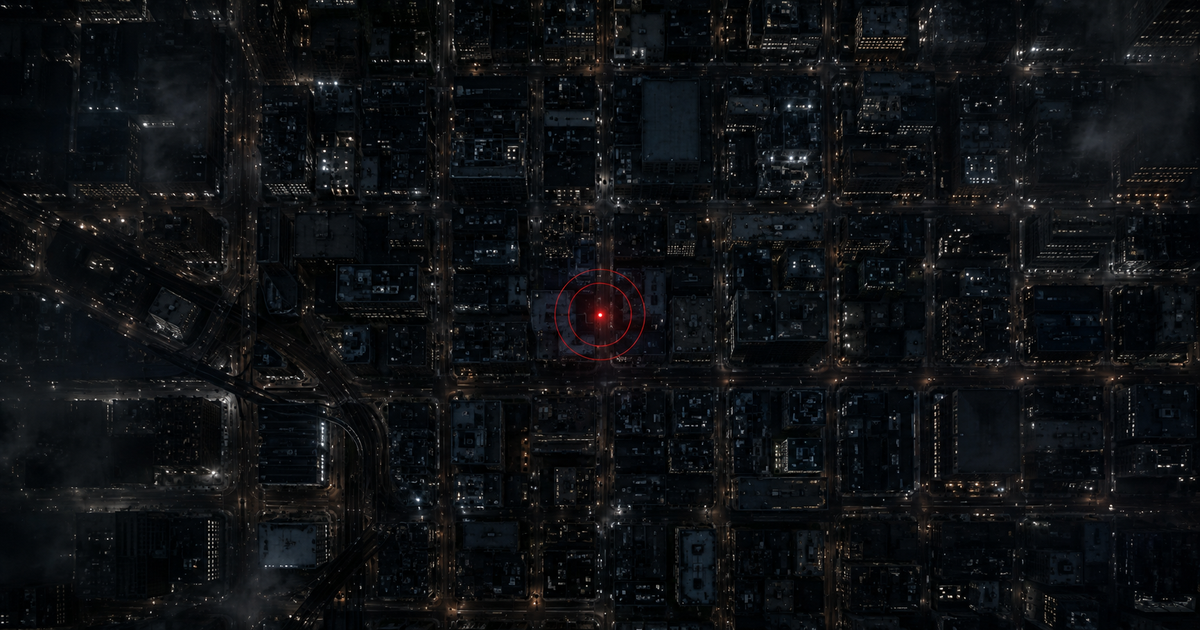
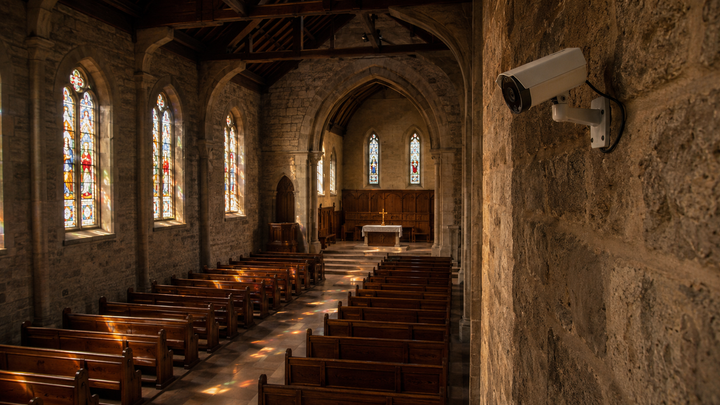
That was cell tower data. What the FBI is now buying is more precise, more comprehensive, and more revealing. Your cell tower data shows which tower you connected to. Your commercial location data — sourced from apps that access your GPS — shows which coffee shop you sat in, which clinic you walked into, which protest you attended, which church you left at 11:15 on a Sunday, which address you drove past three times before parking. The FBI's position is that because a data broker will sell this to anyone, the Fourth Amendment doesn't apply. That legal theory has never been ruled on. It is, as the lawyers say, unsettled.
The Bill That Probably Won't Pass
Senator Wyden, along with Senators Mike Lee, Rand Paul, and Representative Zoe Lofgren, introduced the Government Surveillance Reform Act in March — a bill that would require federal agencies to get a warrant before buying Americans' personal data from brokers. The bill is bipartisan, which is notable. It also has approximately the same chance of passing as previous surveillance reform bills, which is to say: it has been introduced, it will be discussed, and it will likely not become law before the next news cycle buries it.
This is not cynicism. It is pattern recognition. The history of surveillance reform legislation in the United States is a history of bills introduced after each disclosed excess, hearings held, testimonies given, and status quos preserved. The Church Committee in the 1970s produced real reforms. The Snowden disclosures in 2013 produced some reforms and many hearings. Every subsequent disclosure has produced mostly hearings.
The incentive structure is not aligned toward restriction. The agencies find the data useful. The data brokers find the revenue useful. The tech companies find the advertising ecosystem useful. The politicians who might restrict it are lobbied by the tech companies that profit from it. The courts move slowly. The technology moves fast. The gap between what the law permits and what the surveillance infrastructure can do has been widening for fifteen years and is not narrowing.
What You Should Actually Know
Your phone is a tracking device that also makes calls. This is not hyperbole — it is an accurate description of what a smartphone is and how it generates revenue for the apps installed on it. The location data the FBI is buying was generated by you, carrying your phone, living your life, under the reasonable assumption that your weather app needed to know where you were to tell you it might rain.
You were not wrong to assume that. You were simply not aware of what happened to that information after the forecast was delivered.
The FBI director confirmed in March 2026 that the agency buys this data, that it has produced intelligence, and that the agency has no intention of stopping. There is no public list of what that intelligence was used for. There is no public record of which Americans were tracked. There is no notification system. There is no opt-out. There is a bill in Congress that will probably not pass.
There is also, as of March 18, 2026, a statement from the FBI director on the record: we use all tools to do our mission.
Your location history is one of those tools. You paid for it. They bought it. No warrant required.
Sources:
- TechCrunch — FBI is buying location data to track US citizens, director confirms
- Proton — FBI admits buying Americans' location data from data brokers
- The Conversation — US government ramps up mass surveillance with help of AI tech, data brokers