The Universe Is Recording Everything

A 2026 theory proposes that spacetime itself acts as a kind of cosmic memory — that every event leaves a trace in the fabric of reality, and nothing is ever truly gone. The physicists proposing it are not mystics. They are trying to solve three of the biggest unsolved problems in cosmology at once.
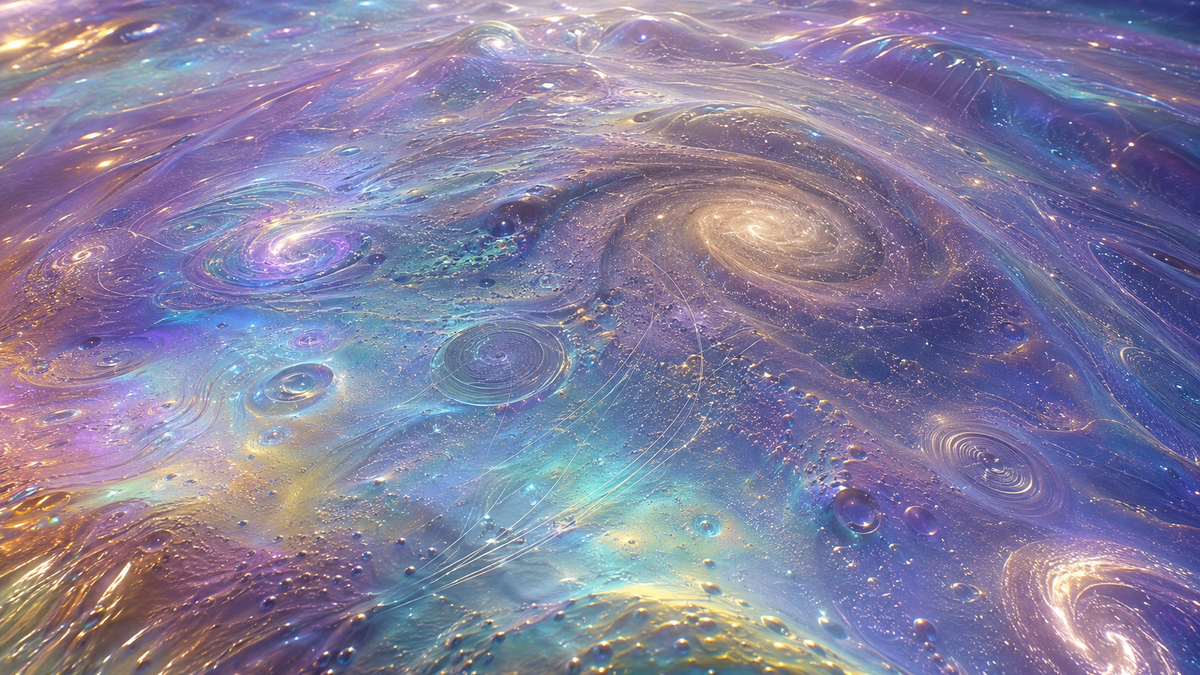
The Universe Is Recording Everything

Stories from the Edge

A 2026 theory proposes that spacetime itself acts as a kind of cosmic memory — that every event leaves a trace in the fabric of reality, and nothing is ever truly gone. The physicists proposing it are not mystics. They are trying to solve three of the biggest unsolved problems in cosmology at once.

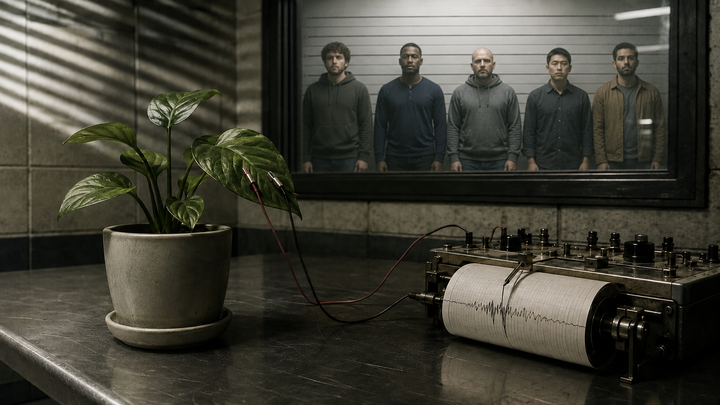
There is a principle in physics called the no-hair theorem. It holds that black holes, regardless of what falls into them, can be fully described by just three properties: mass, charge, and spin. Everything else — every detail of every particle, every piece of information from every object that crosses the event horizon — is lost. Gone. Not hidden, not encrypted: destroyed. This has bothered physicists for fifty years. It bothers them because quantum mechanics says information cannot be destroyed. The universe, at the quantum level, is reversible. Every interaction is theoretically traceable back to its origin. Black holes appear to be the exception — a place where the book stops being kept. Stephen Hawking spent years on this problem. It is still not resolved.

A 2026 theory, covered in ScienceDaily in June, proposes an answer that has implications well beyond black holes: spacetime itself has a form of memory. Not metaphorically. Structurally. The fabric of the universe, in this model, continuously records the history of matter and energy passing through it — and the accumulated record of that history is what produces the gravitational anomalies we've been calling dark matter and dark energy.

What "Cosmic Memory" Actually Means

The theory is grounded in thermodynamics — specifically in the relationship between information, entropy, and the structure of spacetime. The basic proposition: when matter moves through spacetime, it doesn't just pass through. It leaves an imprint. The geometry of spacetime is modified by the history of everything that has traveled through it, and those modifications accumulate over cosmic time scales. The universe isn't just the sum of what's in it right now. It's the sum of what's in it plus the record of everything that's ever been in it.

In this framework, dark matter is not a particle to be found — it is an effect of the accumulated gravitational memory of matter that no longer exists in its original form. Dark energy, the force accelerating the expansion of the universe, is the thermodynamic consequence of that accumulated record interacting with present matter. And the information that appears to be destroyed in black holes is not destroyed — it's encoded in the modification of the spacetime geometry at the event horizon, accessible in principle though not in any practical observational sense.

Why This Is Not Mysticism

The reason this theory is worth taking seriously — the reason it appears in peer-reviewed coverage rather than on a spirituality blog — is that it makes specific, falsifiable predictions about observable phenomena. If cosmic memory is real, the large-scale structure of the universe should show specific signatures of that accumulated history that dark matter particle models don't predict. Some of those signatures overlap with existing anomalies in current cosmological data that the standard model has difficulty accounting for. The theory is not proved. It is testable. That distinction matters enormously.

The universe keeping a record of everything that has ever happened in it is not a mystical claim. It is, under this model, a thermodynamic necessity — as physically grounded as the laws of heat and entropy that everything else in physics is built on.

What It Would Mean If It's True

The implications branch in two directions — one purely physical, one harder to categorize. The physical implication: if cosmic memory explains dark matter and dark energy, then 95% of the apparent content of the universe is not matter or energy at all. It is history. The universe we observe is shaped not just by what exists now, but by everything that has ever existed, encoded in the geometry of the medium through which all of it has passed. The structure of reality is, in this reading, inseparable from the record of everything that has happened in it. That is a significant reconception of what the universe is.

The harder-to-categorize implication is what this does to the concept of the past. In the standard model of physics, the past is gone — events occur, leave effects, and the effects propagate forward while the events themselves cease to exist. In the cosmic memory model, events leave structural modifications in spacetime that persist indefinitely. The past is not gone. It is encoded. Not accessible, not retrievable in any meaningful sense — but present, in the geometry of the fabric that everything else moves through. Nothing, in this model, is ever entirely erased.

Why This Sits at the Edge

This is speculative physics. It is not the consensus. The majority of cosmologists still work within the dark matter particle framework, and the search for those particles continues. But the theory is not pseudoscience — it is a serious attempt to solve three major unsolved problems in physics simultaneously using established thermodynamic principles. It is the kind of idea that lives at the boundary between what is known and what the known cannot yet explain. That boundary is where the next physics has always come from. It is also, not coincidentally, where the old and the mystical and the scientific begin to use the same language for something neither has fully captured yet.


The universe is not just what's in it. It's everything that has ever been in it, still present in the geometry of the space where it used to be. That is a physics claim. It is also, depending on how you hold it, something else entirely.

— The Signal

Sources:

KEEP GOING →

A Third of Americans Consult Tarot or Astrology. This Is Not a Trend. It's a Shift.

One in three American adults now consult tarot cards or astrology as part of how they navigate their lives. When a third

You might also like