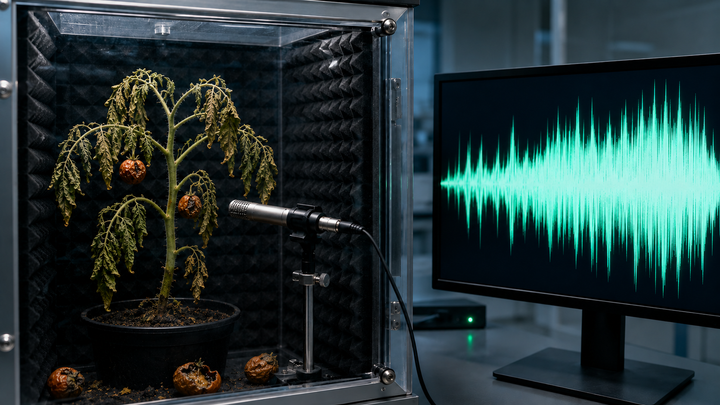
The World Will End in Fire

Frost gave fire and ice equal odds. The wine region of Bordeaux is on fire. A fire cloud is generating its own thunderstorms over France. 300,000 people evacuated. The debate is over. Frost was right.
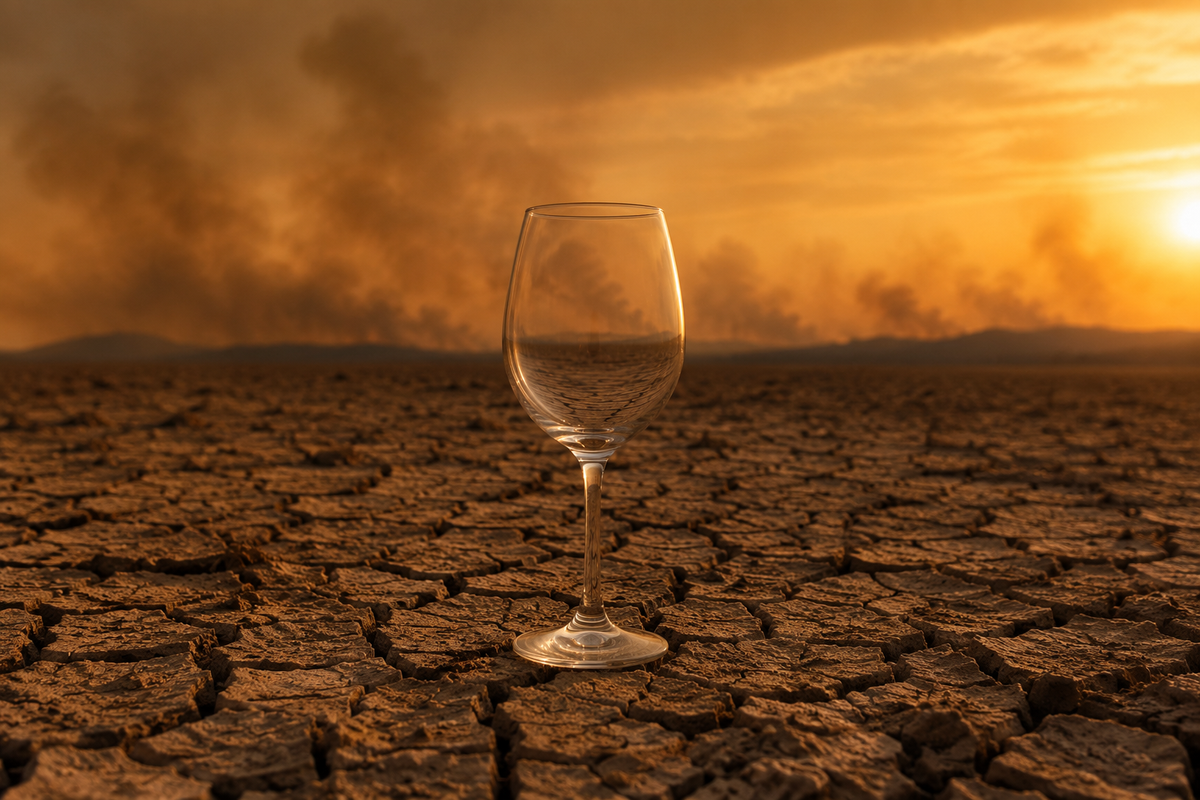
The World Will End in Fire
The World Will End in Fire | Boondock Rebel
Stories from the Edge

Robert Frost had a theory. Two, actually. He gave both sides equal airtime, left the question open, and wrote nine lines that have been assigned in high school English classes for a hundred years. Europe just answered it. The debate is over. Fire won.

Some say the world will end in fire,
Some say in ice.
From what I've tasted of desire
I hold with those who favor fire.
But if it had to perish twice,
I think I know enough of hate
To say that for destruction ice
Is also great
And would suffice.

— Robert Frost, 1920

Frost wrote that poem in 1920, the same year the League of Nations held its first meeting, before commercial aviation, before television, before the internet, before anyone used the word "influencer" without irony. He was riffing on astronomy — the theory that the sun would eventually expand and incinerate the earth, versus the theory that it would dim and leave everything frozen. He gave both sides a fair hearing, as poets do. He personally voted fire. Ice, he conceded, would also suffice.

One hundred and six years later, the wine region of Bordeaux is on fire. The hills outside Madrid are on fire. A fire in France's Gironde region has burned nearly 104,000 acres. The Avila and Toledo areas of western Spain have lost around 190,000 acres. More than 300,000 people have been evacuated — the largest forced evacuation in France since the Second World War. Europe is enduring its fourth heatwave of the summer. Western Europe had its hottest June on record this year. Scientists describe this summer as "virtually impossible" without climate change. The debate Frost left poetically unresolved has been empirically settled by geography. Fire. Definitively fire.

A Brief Word About the People Who Are Surprised

There is a specific kind of person who, when shown photographs of a pyrocumulonimbus — a fire cloud so enormous and so hot that it generates its own internal thunderstorms, its own lightning, its own erratic winds, making the fire "unmanageable" in the technical sense that firefighters use that word — responds by wondering whether the media is exaggerating. This person is not stupid in other areas of life. They balance their chequebook. They know not to eat raw chicken. They understand that if you leave butter on a hot stove it will melt, and that this is because of heat, and that the butter did not choose to melt for political reasons. And yet, when the subject turns to the aggregate heating of the planet over the course of a century, something shifts. Suddenly the thermometer is suspect. The scientists are agenda-driven. The fires are not, strictly speaking, evidence of anything.

This position has been available, as a consumer product, for about thirty years. It was manufactured, largely, by fossil fuel companies who discovered in the 1970s and 1980s that their own internal research confirmed what the scientific community was saying about carbon emissions and warming — and who responded to this discovery not by changing course but by funding an organized campaign to make the public uncertain about whether the science was real. This is not a conspiracy theory. It is a documented corporate strategy with a paper trail, a lobbying history, and, eventually, congressional testimony. The doubt was a product. It was sold. A meaningful percentage of the population bought it, and some of them are currently watching the news coverage of Bordeaux and genuinely wondering whether something else is going on.

On Ridiculing Scientists (A Historical Tradition With a Poor Track Record)

In 1633, Galileo Galilei was hauled before the Inquisition and forced to recant his claim that the Earth orbited the Sun. The Church had a comprehensive theory of cosmic order, and it placed the Earth at the center, and the math that said otherwise was, from the institutional perspective, a problem to be managed. Galileo spent the rest of his life under house arrest. He reportedly muttered, upon being forced to deny heliocentrism, the phrase "Eppur si muove" — "And yet it moves." Whether he actually said it is disputed. What is not disputed is that the Earth continued to orbit the Sun regardless of the Inquisition's position on the matter. The Church formally acknowledged this in 1992. That is not a typo. Nineteen ninety-two. The apology took three hundred and fifty-nine years. The orbital mechanics did not wait.

Ignaz Semmelweis, in 1847, proposed that doctors should wash their hands before delivering babies, because they were going directly from performing autopsies to delivering infants and the mortality rates were, shall we say, suboptimal. His colleagues found this suggestion insulting. The implication that doctors' hands could cause patient deaths was offensive to professional dignity. Semmelweis was ridiculed, institutionally marginalized, and eventually committed to a mental asylum, where he died. Germ theory was confirmed shortly afterward. Handwashing is now considered, by the medical community and most functioning adults, to be a reasonable practice. The germs did not care about the professional dignity of nineteenth-century Viennese physicians.

The pattern here is not subtle. Humans have a documented, recurring, cross-cultural habit of responding to uncomfortable scientific findings by attacking the scientists. It has never once worked. The Earth moved. The germs were there. The carbon is accumulating. The fires are burning. The institution of human denial, however robust and well-funded, has a perfect historical record of losing to physics.

You can hold a congressional hearing to dispute the temperature. The temperature will not be attending.

On Fearing the Devil More Than a Pyrocumulonimbus

There is a particular irony in the overlap between climate skepticism and certain strains of religious fundamentalism, and it deserves a moment's consideration. The same demographic that expresses significant concern about demonic influence, end-times prophecy, and the moral dangers of, say, a children's animated film with a gay character, tends to be overrepresented among those who find the scientific consensus on climate change insufficiently convincing. This is interesting, because the end-times prophecy crowd and the climate scientists are, at this point, describing roughly the same thing — large-scale catastrophic transformation of the world as we know it — and arriving at entirely different conclusions about what to do about it. The prophecy crowd is waiting for divine intervention. The scientists are recommending emissions reductions. Both agree something is happening. The difference is primarily in the proposed response and the question of whose models to trust.

What is genuinely puzzling is the specific calibration of fear. A statistical minority of humans are frightened by a weather phenomenon they can verify by looking out the window, touching a thermometer, or watching footage of 300,000 people evacuating France. A larger number are frightened by an entity for whom the evidentiary basis is, depending on your theological position, either faith-based or documentary (and the documentary evidence is a very old book that has been translated many times by people with institutional interests). This is not an argument against religious belief. It is an observation about the allocation of alarm. The devil, whatever you think of him, has not yet generated a pyrocumulonimbus over Bordeaux. The CO₂ in the atmosphere has. At some point, the threat assessment requires updating.

What Is Actually Happening in Bordeaux Right Now

The Gironde department in southwestern France — the heartland of Bordeaux wine production, a landscape that has shaped its terroir over centuries, a region where the specific combination of soil, microclimate, and accumulated viticultural knowledge has produced some of the most celebrated wines in human history — is currently on fire. The irony of this particular location is almost too neat to acknowledge without laughing, and then immediately feeling bad about laughing. Climate change is burning the wine. The warming that the wine industry has been quietly managing for two decades — earlier harvests, shifting sugar levels, the gradual northward migration of the conditions that used to exist only in Bordeaux — is no longer a management problem. It is a fire. The vines that take years to establish, the soils that took centuries to develop their character, the ecosystem that made the word "terroir" necessary — it is burning, as of this week, while the European weather service issues its fourth consecutive heatwave alert of the summer.

A pyrocumulonimbus — the fire cloud now visible above the Gironde region — is, technically, a cumulonimbus cloud created by the heat of a wildfire. It generates its own internal weather system: lightning, powerful updrafts, erratic wind shifts that carry burning embers far ahead of the fire line. It is, in the most literal possible sense, a fire that has grown large enough to change its own weather. When firefighters describe it as "unmanageable," they do not mean difficult. They mean that the conventional tools and strategies for controlling a wildfire do not apply, because the fire has become a system rather than a location. You cannot put a system out with a hose. You can watch it, evacuate around it, and wait for it to exhaust the fuel it needs to sustain itself. Three hundred thousand people are currently doing the waiting part of this.

The Anti-Intellect Dividend

The anti-science movement — and it is, at this point, a movement with funding, infrastructure, media channels, and a growing academic literature on its mechanics — has delivered a measurable return on investment for the people who built it. Doubt is cheap to manufacture and expensive to correct. A peer-reviewed study takes years and costs money and has to survive scrutiny. A think tank press release costs almost nothing, requires no scrutiny, and travels faster. The asymmetry has been exploited with considerable skill. The result is a public that, in poll after poll, dramatically underestimates the scientific consensus on climate change — believing it to be far more contested among scientists than it actually is. The consensus among climate scientists on human-caused warming is approximately 97%. The percentage of Americans who believe scientists disagree significantly about this is substantially higher. The gap between those two numbers is the return on investment of three decades of manufactured doubt.

The anti-intellect dividend — the broader cultural comfort with treating expertise as an elite affectation rather than a useful tool — has also been productive for those who profit from it. An electorate that has been trained to treat scientific credentials with suspicion, that has been taught that "doing your own research" on YouTube is equivalent to spending a career studying atmospheric chemistry, that has been encouraged to feel that institutional knowledge is inherently corrupt and that gut feeling is a form of epistemology — that electorate is much easier to govern in the direction of continued fossil fuel subsidies. This is not an accident. It was an investment. It has compounded, and now it is burning vineyards in France and evacuating 300,000 people from their homes in summer 2026.

Frost Was Right, For What It's Worth

He also offered ice as a viable alternative, and to be fair, the ice option has not been entirely abandoned. The Greenland ice sheet is melting at a rate that will, eventually, contribute substantially to sea level rise. The Arctic is warming four times faster than the global average. The permafrost — permanently frozen ground that has stored enormous quantities of carbon for thousands of years — is thawing and releasing that carbon, which accelerates warming, which thaws more permafrost, which is the kind of feedback loop that makes climate models difficult to read at the far end of their projections. So technically, ice is also in play. It is just playing for the other side now. The ice is melting in order to help things get hotter. Even Frost's alternative has defected.

The scientific community is not panicking. Scientists are, by training and professional culture, constitutionally resistant to panic — they prefer terms like "significant concern" and "urgent action required" and "increasingly likely." What they are describing, in those measured terms, is the thing that is currently visible as a fire cloud over France and a 300,000-person evacuation and a fourth consecutive heatwave. The measured language does not mean the situation is measured. It means scientists talk differently than fire does.


Go outside today. Seriously — take a walk in the woods, sit in a garden, smell something green, look at a tree for longer than it takes to photograph it. Not because it is going away tomorrow. It is not going away tomorrow. But 300,000 people in France and Spain this week did not expect to spend July watching the landscape they lived in turn into the thing that Frost wrote a poem about. They had plans. The forest had been there their whole lives. Go outside. Pay attention to what you have. Notice it. It is beautiful. It is the kind of thing that took a very long time to make and that certain types of human stupidity, given enough time, have proven themselves fully capable of unmanning. Frost voted fire. He was right. In the meantime — while we still have a meantime — go use it.

— Boondock Rebelle

Sources:

Subscribe now — make a bold move