They Declassified the UFO Files. The Real Story Isn't Aliens, It's What Took So Long.
Decades of "we can't talk about that," and the actual reveal is mostly balloons and bad camera footage. So what were they actually protecting?
Redacted
Decades of "we can't talk about that," and the actual reveal is mostly balloons and bad camera footage. So what were they actually protecting?
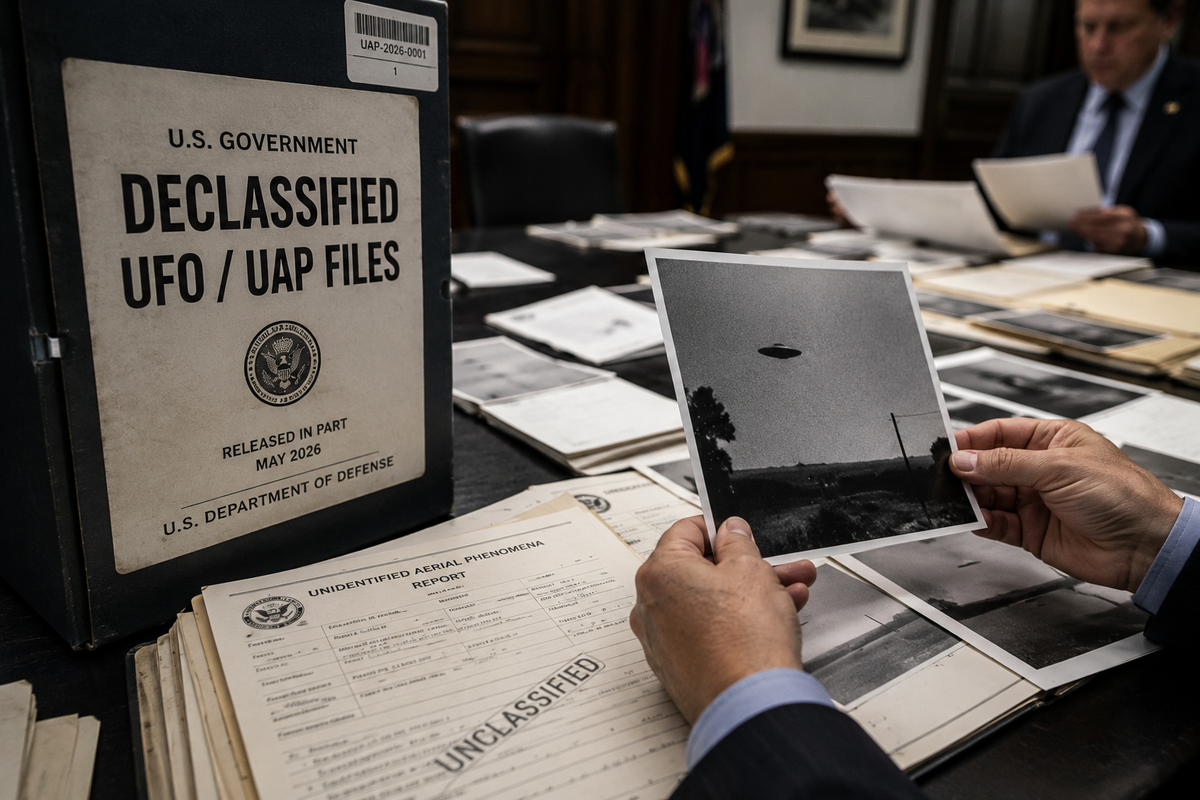
In February 2026, the order came down: federal agencies were to identify and declassify their files connected to UFOs, UAPs, and extraterrestrials. By May, the first wave of material was public — reports, photographs, videos, witness accounts, military records, even astronaut transcripts, some dating back to the 1940s. Decades of "that information is classified for national security reasons," and the actual contents turned out to be, by most independent assessments, underwhelming: smears of light, optical artifacts, fuzzy blobs, and yes, a fair number of balloons.
So let's ask the more interesting question than "are aliens real," because the documents themselves mostly answered that one with a shrug. The better question is: if the files were this unremarkable, why did it take seventy-plus years, multiple congressional pushes, and a direct presidential order to get them released at all?
The Gap Between "Classified" and "Embarrassing"
This is the part that should interest you more than little green men. Classification, in practice, gets used for two very different reasons that the public is rarely allowed to distinguish between: genuine national security risk, and simple institutional embarrassment. A government doesn't need to be hiding aliens to have an incentive to keep seven decades of UFO files locked up — it just needs those files to contain a lot of documented incompetence. Misidentified weather balloons treated as Soviet threats. Panicked radar operators. Internal memos mocking witnesses who turned out, on closer review, to have seen something genuinely unexplained that nobody followed up on properly. None of that is a security risk to release. All of it is mildly humiliating to admit, and "mildly humiliating" turns out to be plenty of motivation to stamp something secret and let it age out of public memory.
Classified doesn't always mean dangerous. Sometimes it just means somebody, decades ago, didn't want to explain themselves, and nobody since has had a reason to make them.
The Congressional Pressure That Actually Moved This
It's worth giving credit where it's due, however messy the underlying motivations: this declassification didn't happen because an agency woke up one morning newly committed to transparency. It happened because members of Congress, across an unusual ideological mix, kept publicly pushing the claim that the government was sitting on more than it was admitting — pressure that eventually became politically costly enough to ignore that an executive order followed. That's the actual mechanism by which secrecy gets pried open in a system like this one: not internal virtue, but external pressure applied long enough and loudly enough that continued silence becomes more expensive than disclosure.
What "Underwhelming" Doesn't Tell You
Here's the trap worth avoiding on both sides of this story. The skeptics' instinct — "see, it was nothing, the conspiracy theorists were wrong all along" — moves too fast in the other direction. An underwhelming declassification doesn't retroactively prove the secrecy was reasonable. It just means this particular set of files didn't contain aliens. It says nothing about whether the decades of stonewalling, mockery of witnesses, and reflexive secrecy were ever justified in the first place, or whether the next batch of files — and there's reportedly more still working through the release pipeline — stays just as mundane.
It's also worth noticing what kind of person got hurt by decades of "no comment." Military pilots and trained observers who reported genuinely unexplained sightings spent years being quietly written off as unreliable, their careers occasionally shadowed by the reputation of having seen "something," while the institution that could have offered context simply declined to. Whatever the files ultimately reveal, the cost of decades of blanket secrecy wasn't paid by the agencies that imposed it. It was paid by the witnesses who were never taken seriously while everyone waited for permission to talk about it.
The Actual Lesson
The lesson here isn't "the government has been hiding aliens" or "the government has nothing to hide." It's narrower and more useful than either: institutional secrecy defaults to self-protection long after any legitimate security rationale has expired, and it only unwinds under sustained external pressure, never on its own schedule. That's true of UFO files. It's also true of a great deal of material that has nothing to do with the sky.
So: now that we know seventy years of secrecy bought us mostly balloons and bad footage — what else is currently classified for reasons that have a lot more to do with avoiding an awkward conversation than protecting anyone, and how long are we willing to wait for the pressure that finally pries it open?
Sourcing
- Fox News — "Public reacts to Pentagon's first declassified UAP files and videos release" (2026)
- The War Zone — "The Newly Released Government UFO Archives Will Leave You Shrugging" (2026)
- United States UFO files — background and timeline