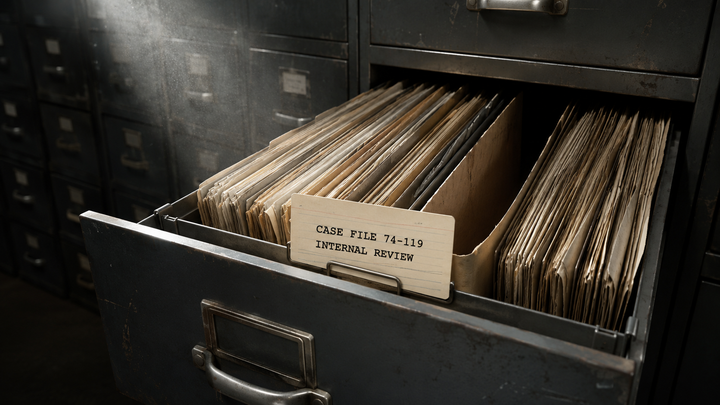
They Just Confirmed the CIA Drugged Prisoners of War. Who Else Did They Test On?

It took seventy years and a FOIA request to get a one-sentence apology nobody actually wrote.
They Just Confirmed the CIA Drugged Prisoners of War. Who Else Did They Test On?

Redacted

It took seventy years and a FOIA request to get a one-sentence apology nobody actually wrote.
Let's start with the sentence that should be a bigger headline than it is: declassified CIA documents have now confirmed, for the first time, that American intelligence agencies tested mind-control techniques on prisoners of war in U.S. custody during the Korean War. Not "may have." Not "documents suggest." Confirmed. Seventy-some years later, with most of the men involved long dead, the paperwork finally caught up to what survivors and historians have been saying for decades.

This is not a new conspiracy theory wearing a fresh coat of paint. This is Project MKUltra — the same program your high school history class may have mentioned in one breathless paragraph about LSD and "brainwashing" — getting a little more honest about who, exactly, it was testing on. And the answer, as it so often is in these stories, turns out to be: people who couldn't say no.

The Pattern, Not Just the Program

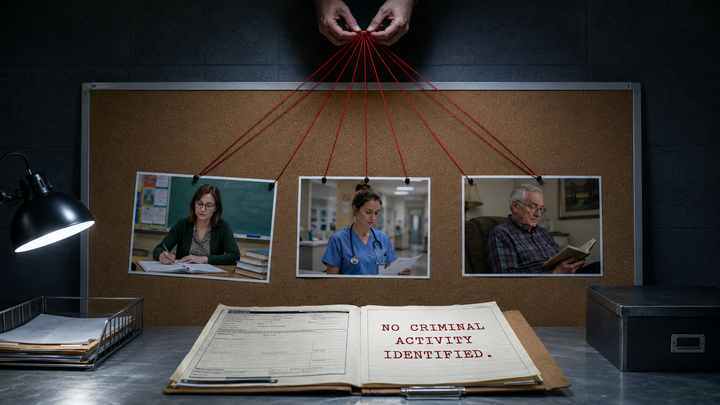
Here's what makes this confirmation worse than a single bad program from a long-gone era: it fits a pattern so consistent it stops looking like a series of isolated abuses and starts looking like a methodology. Look at who keeps showing up on the test-subject side of these files across the decades — prisoners, psychiatric patients, soldiers who couldn't refuse an order, unhoused people recruited with cash and no informed consent, sex workers paid to lure men into CIA-run "safehouses" wired for surveillance and drugged with LSD without their knowledge. The common thread isn't randomness. It's leverage. Every single category of person experimented on was a person whose objection wouldn't be believed, wouldn't be followed up on, or wouldn't be heard at all.

That's the actual headline buried under "CIA tested mind control on POWs": the institution didn't choose its test subjects by chance. It chose them by vulnerability, the same way every abusive system eventually does, because vulnerability is just another word for "won't be able to make this expensive for us later."

You don't need a conspiracy to explain who gets experimented on. You just need to ask who's least likely to be believed if they complain.

What Was Actually in the Files

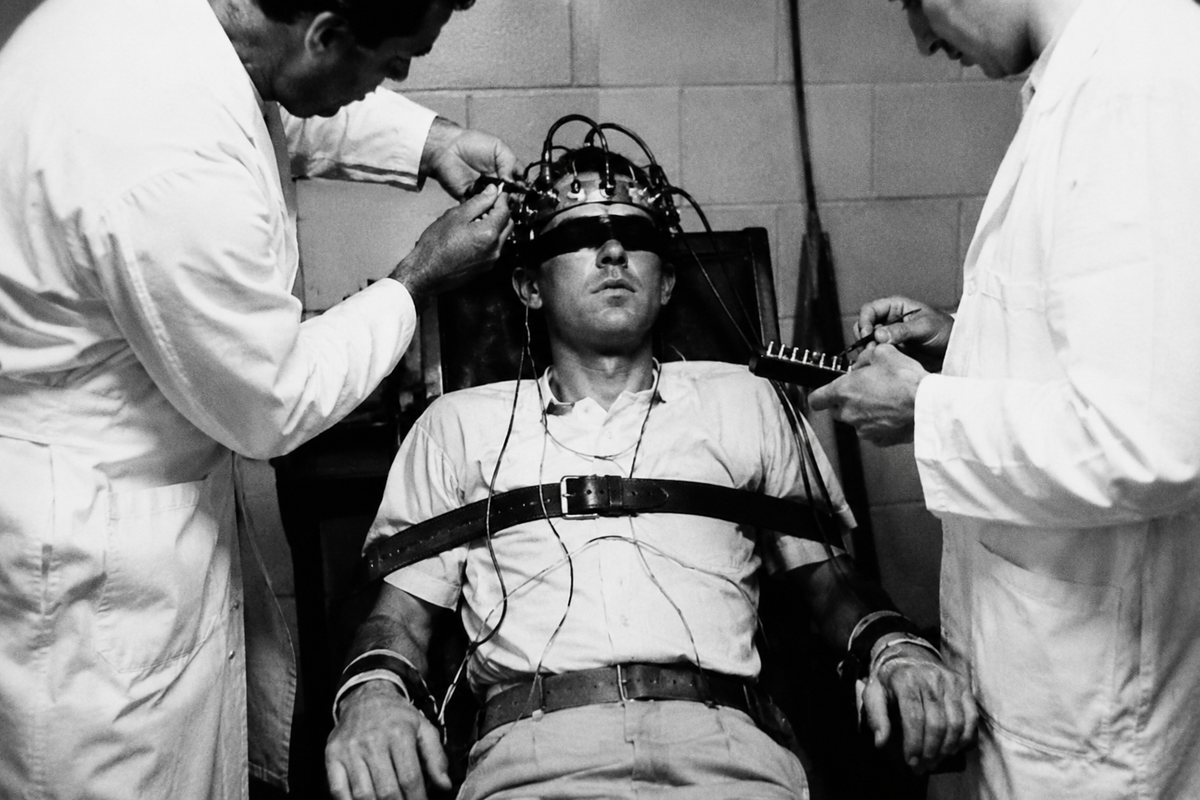
The newly confirmed material describes Korean War-era prisoners in American custody subjected to early MKUltra-style behavioral research — techniques aimed at extracting information, breaking down resistance, and, more disturbingly, exploring whether a person's will could be overridden entirely. This sits inside the broader MKUltra umbrella, a program that ran roughly from the early 1950s into the early 1970s, spanning at least 80 institutions — universities, hospitals, prisons — many of which had no idea the CIA was the actual source of funding behind the "research" happening on their premises.

The program's stated goal, in its own internal language, was unnervingly direct: determine whether a human being could be made to act against their own will, their own judgment, even their own survival instinct, through drugs, hypnosis, sensory deprivation, or some combination none of the test subjects ever consented to. Some of MKUltra's most infamous offshoots involved keeping subjects under LSD's influence for weeks at a stretch — one declassified account describes a subject dosed continuously for 77 days. These were not always foreign adversaries or wartime captives. Some were the CIA's own personnel, dosed without warning by their own colleagues, just to see what would happen.

The Slow Drip of "Sorry"

What's almost more revealing than the program itself is the choreography of its disclosure. MKUltra wasn't uncovered in one clean moment of accountability — it leaked out in installments, over half a century, each new release reframed as "newly declassified" rather than "previously hidden," which is a remarkably effective way to avoid ever having a single, sustained reckoning. A scandal that arrives in one blast forces a response. A scandal that arrives in fifty-year installments just becomes background noise, filed under "history," safely retired from the news cycle before anyone has to actually answer for it in a room with consequences.

Senate hearings in 1977 forced some of the first real public accounting, after a Freedom of Information Act request turned up roughly 20,000 documents the CIA had somehow overlooked when it destroyed the bulk of the MKUltra paper trail in 1973 — destroyed, notably, right as the program was coming under congressional scrutiny. Even then, what survived was a fraction of what existed. The institution that ran the experiments was also the institution that decided what evidence of the experiments got to survive.

Why "It Was a Long Time Ago" Doesn't Land

The easiest way to defang a story like this is to file it under ancient history — black-and-white photos, a more paranoid era, a program everyone agrees was bad and is therefore safely over. But the actual lesson of MKUltra was never "the CIA did a creepy thing in the fifties." It was "an institution with enough power and enough secrecy will eventually test its limits on the people least equipped to stop it, and it will keep doing that until something outside the institution forces transparency." Nothing about that mechanism is decade-specific. It's a description of how unchecked power behaves, full stop, and the only variable that changes across eras is the vocabulary used to justify it.

This is worth sitting with the next time a government agency, a pharmaceutical company, or a tech platform insists that current oversight makes a repeat impossible. Oversight didn't stop MKUltra either, for two full decades. What stopped it — partially, imperfectly — was outside pressure: journalists, a Senate committee, a FOIA request that got lucky. The lesson isn't that the system polices itself. It's that the system gets policed, occasionally, when someone outside it refuses to let go.


So here's the actual question this new confirmation should raise, and it has nothing to do with the 1950s: which current institutions are quietly testing the limits of what they can do to people who can't fight back — and how many decades will it take before we get the paperwork to prove it?

Sourcing

Subscribe now — make a bold move