Goldman Says AI Could Displace One in 11 Workers. The Layoffs Are Waiting for a Recession.
Goldman Sachs published a note on Thursday saying that up to 9% of workers in developed economies could be displaced by AI, roughly one in eleven when slower hiring is counted. The number is not the news. The timing is: the bank says the damage is likely to wait for the next recession, which means the layoffs have been scheduled, in effect, by the business cycle rather than by the technology.
The number, and what it actually measures
The note, from Goldman economist Joseph Briggs, starts from an assumption: that AI eventually lifts productivity in the U.S. and other developed economies by 15%. Historically, each 1% of technology-driven productivity gain has raised cumulative gross job losses by 0.5 to 0.6 percentage points. Multiply the top of that range by 15 and you get about 9%. Add another 3% in jobs that never get created because companies hire more slowly, and you arrive at one worker in eleven.
The estimate has crept upward. In August 2025, Briggs and a colleague put displacement at 6% to 7%, inside a range of 3% to 14%. By June 2026 the figure was about 9%, or roughly 15 million workers over a decade. Each revision has moved in one direction.
The measure matters. This is gross job loss, not unemployment. Briggs says that even at 9%, the annual rise in unemployment would probably stay under one percentage point, because some displaced workers find new jobs quickly and others simply leave the labor force. That last clause deserves a second look. A person who stops looking for work disappears from the unemployment rate. The statistic improves while the person does not.
Why the layoffs are waiting
The note's central argument is that displacement stays muted while the economy is healthy and accelerates in downturns. Goldman points to the history of routine work: the share of Americans in jobs like clerks and machine operators held steady during expansions and fell sharply in the recessions of the early 1980s, 2001, 2008 and 2020. Goldman's U.S. economists made the same point a year ago, and it is now the house view.
The present quiet fits the pattern. AI-attributed layoffs in Challenger's tracking have dropped sharply from their spring peak. Job growth in the most AI-exposed industries is running about 10,000 below trend over three months, a gap that AI-related construction hiring roughly offsets. The data center buildout is, for now, employing people to build the machines that may later employ fewer of them.
Only 23% of U.S. establishments have built AI into regular workflows. The other 77% have not yet had a reason to rebuild around it. A recession supplies the reason. Executives who would hesitate to replace a team in a strong market have a ready justification when revenue falls and the board wants costs cut. Technology that has been piloted for years is then deployed in a quarter.
Who absorbs the shock
Briggs looked at 25 occupations hit by earlier waves of technology and found that employment fell an average of 25% over the five years after it began to decline. He calls those likely upper bounds for AI. The caveat comes with its own caveat: Goldman acknowledges that the 9% figure could be low, since displacement ran higher during the productivity boom of the late 1990s and early 2000s, and it expects AI's boost to exceed most past ones.
A forecast like this describes an average, and averages hide who is standing where. The workers in routine, screen-based, process-driven jobs carry a disproportionate share of the risk, and they tend to be the ones with the least leverage over how the transition is run. Nothing in the note suggests the gains from a 15% productivity increase are earmarked for them.
The legal backstop is thin and local
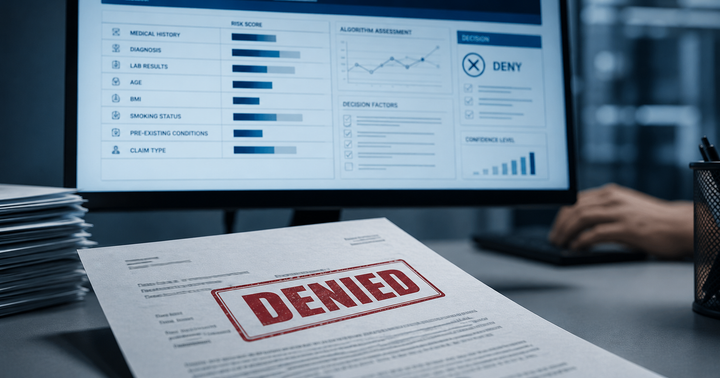
The policy response so far is patchy. On September 30, California Governor Gavin Newsom signed a set of employment-related AI bills, including the so-called No Robo Bosses Act, which places direct restrictions on employers relying on AI when making discipline and termination decisions. Employment lawyers have framed it as a landmark. It is also one state, and it addresses how a decision is made, not whether the work still exists. A human can sign off on a layoff that software recommended, and the paperwork will look fine.
That is the gap worth watching. Rules written around "robo bosses" assume the harm is a machine firing a person. The more probable harm is quieter: a company declines to backfill, freezes hiring in the affected roles, and lets attrition do the work. The 3% slower-hiring component of Goldman's estimate is exactly that, and it generates no termination notice for anyone to challenge.
What the quiet is for
It is easy to read the current lull as evidence that the fears were overblown. Goldman reads it the opposite way: a window. Companies are learning what the tools can do while labor markets are resilient and the cost of disruption is high. The adoption is happening on the quiet side of the ledger, and the cuts are queued behind the next downturn.
If that is right, then nobody will be able to say afterward that the recession caused the job losses, or that the machines did. Both will be true, and the people deciding will have had years to prepare the explanation. The workers, meanwhile, are being asked to plan their lives around a risk that the people forecasting it describe as certain in direction and uncertain only in date.
Sources
- Fortune: AI could displace one in 11 workers, Goldman says, but the layoffs are likely waiting for a recession (Oct. 22, 2026)
- Sheppard Mullin: California Signs Landmark New AI Workplace Laws on Termination, Layoffs and Surveillance (Oct. 12, 2026)
- HR Morning: California's New Workplace AI Laws: 8 Takeaways for HR