Ten Minutes or You're Fired: Inside the Algorithm Running the Gig Economy
No manager ever has to fire you. The app just stops giving you shifts.
The Underdog Files
No manager ever has to fire you. The app just stops giving you shifts.
A new Human Rights Watch investigation, drawing on workers across nine countries and seven of the largest gig platforms operating in the U.S. — Amazon Flex, DoorDash, Favor, Instacart, Lyft, Shipt, and Uber — describes a labor system that has, in effect, automated the worst parts of management while removing every human being who used to be accountable for the decisions. Low and unstable pay. Unsafe conditions. Little or no protection when a worker is injured or simply can't work that day. None of this required a single manager to make a cruel decision in the moment. The cruelty is baked into the code that assigns the shift.
The Ten-Minute Problem
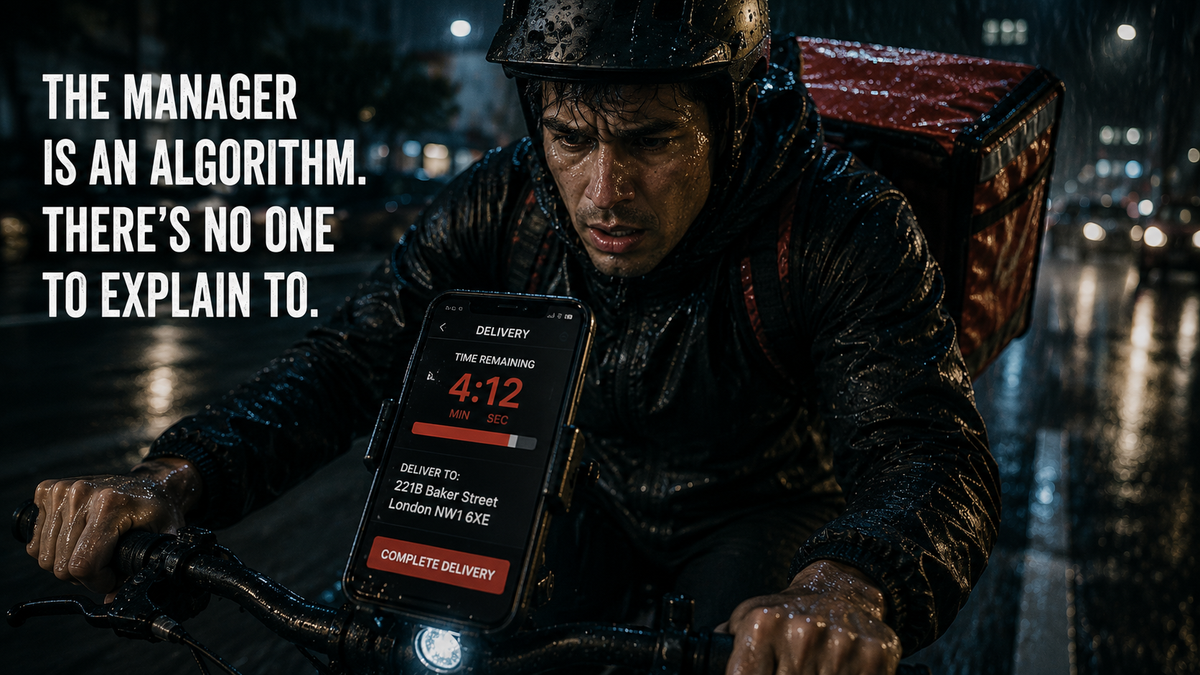
Take the specific, almost absurdly literal example that forced a government to actually intervene: delivery platforms in India introduced ten-minute delivery guarantees, a marketing promise to customers that, on the backend, translated into algorithmic pressure on individual drivers to complete every single job within that window, regardless of traffic, weather, distance, or basic physical safety. Workers protested nationwide. The government moved, in January 2026, to actually restrict the practice — a rare case of regulation catching up to an algorithm before the algorithm finished grinding through an entire workforce.
Nobody sat in a room and decided to make delivery workers run red lights. A line of code optimizing for customer promise-times did that, and it never once had to feel bad about it.
What makes this example useful beyond its own borders is what it reveals about the mechanism, not just the specific harm. The ten-minute guarantee wasn't a rogue feature — it was the entire business model's competitive edge, marketed directly to customers as the reason to choose this platform over a slower one. The pressure on workers wasn't a side effect nobody anticipated. It was the product.
Management Without a Manager
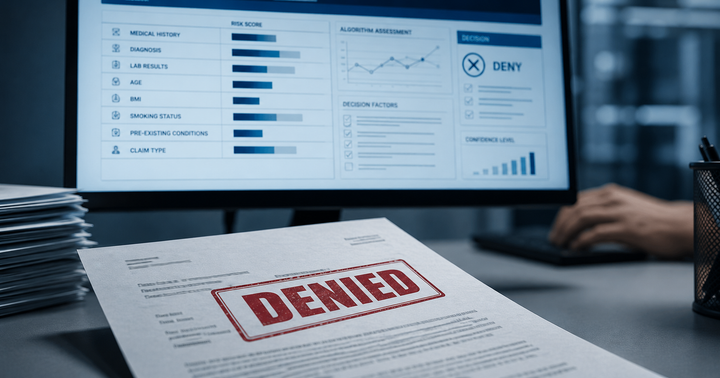
Here's the structural innovation gig platforms have actually pioneered, and it deserves to be named precisely because it's so effective at avoiding the language we already have for labor abuse: there is no manager to point to. No supervisor decided your hours got cut this week. No one chose to deactivate your account after that one bad rating. An algorithm, trained on metrics nobody working the actual route ever got to negotiate, made a series of automated decisions that functionally reproduce every classic form of exploitative management — favoritism, retaliation, unpredictable scheduling, opaque discipline — while removing the human being a worker could historically appeal to, organize against, or hold legally accountable.
Researchers studying this pattern across the industry have started calling it algorithmic management, and the term matters because it's doing real descriptive work: it's not the absence of management, it's management with all the discretion intact and all the accountability stripped out. The algorithm still decides who gets the good routes, who gets fewer hours after a string of low ratings, who gets quietly deactivated. It just does it without ever having to explain itself to anyone, including, often, the worker on the receiving end.
The Rating System as a Silent Disciplinary Tool
Customer ratings, sold to workers as harmless feedback, function in practice as a continuous, largely unappealable performance review with direct income consequences — fewer high-value jobs offered, lower priority in the queue, eventual deactivation, all triggered by an aggregate score shaped by factors entirely outside a worker's control: a customer's bad day, a building's broken elevator, traffic the worker didn't create. Workers describe being effectively unable to contest a rating-driven deactivation in any meaningful way, since the process that triggered it was never disclosed to them with enough specificity to argue against.
Wage Theft, Automated
Beyond scheduling pressure, the same investigations describe a pattern of algorithmic wage manipulation — pay calculations workers can't audit, surge pricing that doesn't reliably translate into surge pay, fees and adjustments applied after a job is already accepted and the worker has no real ability to decline. Advocacy groups have started describing this specific pattern as a governance crisis rather than a series of isolated billing errors, because the opacity isn't incidental. A worker who can't see how their pay was calculated can't meaningfully contest it, and a platform that controls both the calculation and the appeal process has very little incentive to make that math any clearer than it currently is.
The International Reckoning Already Underway
This isn't only a domestic story. Governments negotiating a landmark International Labour Organization treaty on platform work in 2026 are weighing binding standards for fair pay, safety, and social security protections for gig workers globally — a sign that what looks, from inside any single platform, like an unfixable feature of the modern economy is increasingly being treated, by the people who actually write labor law, as a solvable governance failure rather than an unavoidable cost of convenience.
So: if no human being ever had to personally decide to make you choose between a red light and your paycheck — does that actually make it less of a decision, or does it just mean the people who built the system found a way to make the decision without ever having to look you in the eye while they made it?