The $233 Million Fraud Scheme That Used Your Healthcare.gov Application Against You

They didn't hack the system. They just understood it better than the people it was supposed to protect.
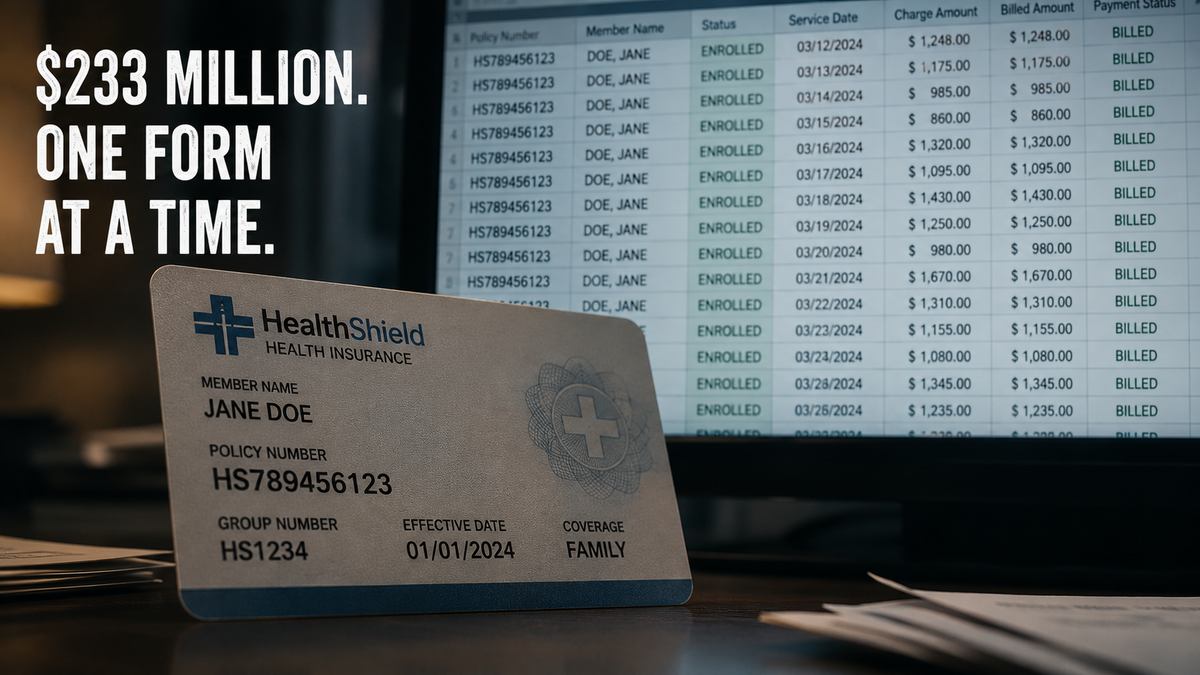
The $233 Million Fraud Scheme That Used Your Healthcare.gov Application Against You

The Underdog Files

They didn't hack the system. They just understood it better than the people it was supposed to protect.


Here's a scheme elegant enough to almost admire, if it weren't built entirely on the backs of people who just wanted health insurance: an insurance brokerage figured out it could deliberately submit applications to Medicaid in a way nearly guaranteed to get denied — not because the applicants weren't eligible, but because the applications were engineered to fail — and then turn around and enroll those same, already-frustrated people into fully subsidized Affordable Care Act marketplace plans instead, collecting a commission on every single one.

The firm's former president was convicted at trial and sentenced to twenty years for his role in running it. The broader scheme, across related entities, has resulted in settlements exceeding $160 million and convictions tied to a separate $233 million fraud operation built on the same basic playbook: identify the gap between what a government program is supposed to do and what it actually verifies, and walk a few hundred thousand people through that gap, profitably, while letting them believe the process was simply how enrollment works.

The Part That Should Make You Angrier Than the Dollar Figure

It's tempting to read a story like this as a straightforward fraud case — bad actors gaming a system, eventually caught, appropriately punished, justice more or less served. That framing undersells what actually happened to the people in the middle of it. These were not anonymous numbers being shuffled on a spreadsheet. These were individuals navigating a genuinely confusing federal enrollment system, trusting a broker to help them get covered, who instead got quietly redirected — denied Medicaid they may well have been eligible for, then steered into a different plan that happened to generate a commission, with no real understanding that the "help" they were receiving had been engineered against their interests from the start.

The fraud wasn't hidden in fine print. It was hidden in the assumption that "my broker is helping me" and "my broker is profiting off my denial" couldn't both be true at once.

The scheme also reportedly involved bypassing federal verification systems designed specifically to catch this kind of manipulation — checks meant to confirm income and eligibility before an enrollment goes through. That detail matters: this wasn't a clever exploitation of an unavoidable blind spot. It was a deliberate workaround of a safeguard that existed precisely to prevent this, run long enough and at enough scale to generate hundreds of millions of dollars before it caught up with the people running it.

The System That Made It Possible

Step back from the specific brokerage and look at the structural conditions that made a scheme like this profitable in the first place. A subsidized marketplace plan generates an ongoing commission for the broker who enrolls someone in it. A Medicaid enrollment, by contrast, generates little to no commission at all for the broker facilitating it. The financial incentive built into the system, for any broker willing to ignore the ethics of it, points in exactly one direction: away from the cheaper public program and toward the commission-generating private plan, regardless of which one actually serves the applicant better.

That incentive structure didn't require a criminal mastermind to notice. It just required someone willing to act on what was already, quietly, true about how the system pays the people navigating you through it. The fraud wasn't an aberration bolted onto an otherwise neutral system. It was an aggressive, illegal version of an incentive the legitimate version of the system already contained in a milder form.

How Long It Ran Before Anyone Noticed

Schemes at this scale don't typically get caught quickly, and this one is no exception — it operated across multiple years and multiple corporate entities, surviving at least one change of ownership, before the enforcement action that finally ended it. That's the part that should inform how much comfort anyone takes from the eventual conviction. The system didn't catch this efficiently. It caught it eventually, after enough damage had accumulated that the pattern became too large to miss — which is a very different, much less reassuring claim than "the safeguards worked."

What Restitution Doesn't Restore

A $160 million settlement and a $233 million fraud conviction sound, on paper, like accountability delivered. They are not nothing. But restitution paid to the government doesn't automatically find its way back to the specific people who were denied Medicaid they were entitled to, steered into a plan that may have cost them more, or left with a damaged sense of trust in a system they were told to rely on. The dollar figure closes the government's books. It does not undo what individual applicants actually experienced while the scheme was running.


So: if the incentive that made this fraud profitable — commission for private plans, none for public ones — still exists in the legitimate version of the system, what's actually stopping the next version of this scheme, run just carefully enough to stay under the threshold that gets noticed?

Subscribe now — make a bold move