Washington Waived the Paperwork. The Whistleblower Wants Immunity.

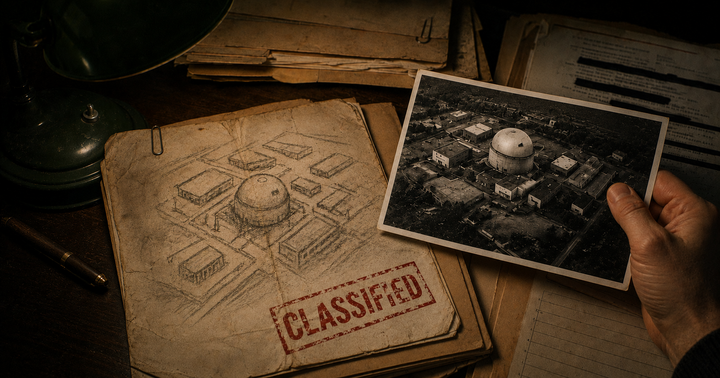
On July 31, the Office of the Director of National Intelligence told the entire intelligence community that non-disclosure agreements no longer stood between government personnel and a specific set of federal channels for reporting what they know about unidentified anomalous phenomena. It was framed as a breakthrough — the paperwork wall coming down after decades of enforced silence. Three weeks later, the government's most cited UAP whistleblower asked President Trump for something the memo never offered: immunity. Not an NDA release. Immunity. The distinction is the story.
Three Different Locks, One Key Offered
David Grusch, the former intelligence officer whose 2023 testimony before Congress put "crash retrieval" back into the national vocabulary, has spent the past two weeks making his most specific claims yet. On the Dr. Phil Podcast on August 13, he said the United States has recovered somewhere between 25 and 100 craft over eight or nine decades — some empty, some not. Days later, filmmaker James Fox reported that Grusch personally reviewed classified imagery of recovered vehicles and their alleged occupants. Grusch is now pressing the administration to release that material and to protect the people who could corroborate it. His ask is immunity, and the reason is instructive: an NDA waiver, immunity from prosecution, and declassification are three legally distinct instruments, and having one does not produce the other two.
An NDA is a contract. It obligates silence between two private parties — in this case, an individual and an agency. Waiving it removes a self-imposed obstacle. Immunity is different: under 18 U.S.C. §§ 6002 and 6005, it protects a person's compelled testimony from being used against them, but it does nothing to make a classified photograph lawful to publish. Declassification is different again — it changes a document's legal status entirely. The ODNI memo touched exactly one of the three. It said nothing about immunity, and it said nothing about declassifying the underlying material. A whistleblower can now, in theory, walk through a door that was already legally open — because it turns out one existed before the memo ever did.
The Door That Was Already There
The 2023 National Defense Authorization Act created a statutory channel — 50 U.S.C. § 3373b — that lets people report UAP information to the All-domain Anomaly Resolution Office without running afoul of an NDA, a classification order, the Atomic Energy Act, or the Espionage Act's secrecy provisions. It bars retaliation against anyone who uses it. AARO has operated that channel for three years. Legal analysts reviewing the July 31 guidance have noted it is, in one respect, narrower than the law Congress already passed: it addresses only NDAs and similar private agreements, not the broader universe of classification authority the 2023 statute covers. What the memo mainly does is formalize and publicize a pathway that already existed — and route information toward AARO or a designated PURSUE representative, not toward a press conference or a podcast. Whatever a whistleblower says through that channel goes to investigators. The public doesn't get to hear it unless someone decides to let them.
That's the gap Grusch is pointing at. He isn't asking to be freed from a contract he signed. He's asking the administration to guarantee he won't be prosecuted for what he says next, and to release the files that would let the public evaluate his account rather than simply believe or disbelieve it on the strength of testimony alone.
A Rolling Release, Managed Closely
The administration has not been silent on disclosure this year — it has been busy. PURSUE, the Pentagon's Presidential Unsealing and Reporting System for UAP Encounters, released its fifth tranche of documents on August 7: 41 files spanning FBI field reports, infrared footage, and a pilot's account of a 500-foot triangle over Bagram Airfield in 2002. It's a genuine volume of material, drawn from the Pentagon, FBI, CIA, State Department, and the Executive Office of the President, going back to 1950. But volume and specificity are not the same thing. None of the five tranches has included the crash-retrieval material Grusch describes, and the Pentagon's own UAP office maintains it has found no verifiable evidence of government or industry access to extraterrestrial technology. NASA says the same. Those official positions haven't moved even as the document releases have continued on a steady, monthly cadence — a pattern that lets an administration look transparent while controlling, tranche by tranche, exactly what transparency means.
It is possible to hold two things at once here: Grusch's claims remain unverified — testimony that a statement was made is not confirmation that the underlying event occurred — and the government's chosen instrument for addressing those claims has, so far, been the instrument least likely to produce evidence anyone outside a classified system can examine. A memo about paperwork is not the same as a memo about proof.
Who Actually Holds the Keys
PURSUE has declassification authority. The administration could, in principle, order a review of the specific facilities and records Grusch says he can identify, redact what genuinely implicates sources and methods, and let independent scientists and journalists see what's left. It has not committed to doing that. What it has done is waive a category of paperwork that a separate federal statute had already addressed three years earlier, and call it progress. Whether that's a first step toward the immunity and declassification Grusch is now requesting, or the full extent of what this administration intends to offer, is not something the July 31 memo answers. It's something the next memo will have to.
Sources
- Whistleblower David Grusch Asks Trump for Immunity — Not an NDA Release — USA Herald, Aug. 20, 2026
- The NDA Question: Why UAP Insiders' Shifting Stories Are Colliding with a New Federal Disclosure Order — USA Herald, Aug. 16, 2026
- ODNI Issues Preliminary Guidance on Disclosure of Unidentified Anomalous Phenomena — DLA Piper, August 2026
- Pentagon releases new batch of UFO files: "Did you see that?" — CBS News
- Unidentified Anomalous Phenomena: Implications on National Security — House Oversight Committee hearing, July 2023
- 50 U.S.C. § 3373b — Cornell Legal Information Institute
- DOD Report Discounts Sightings of Extraterrestrial Technology — U.S. Department of Defense
- UAP FAQs — NASA